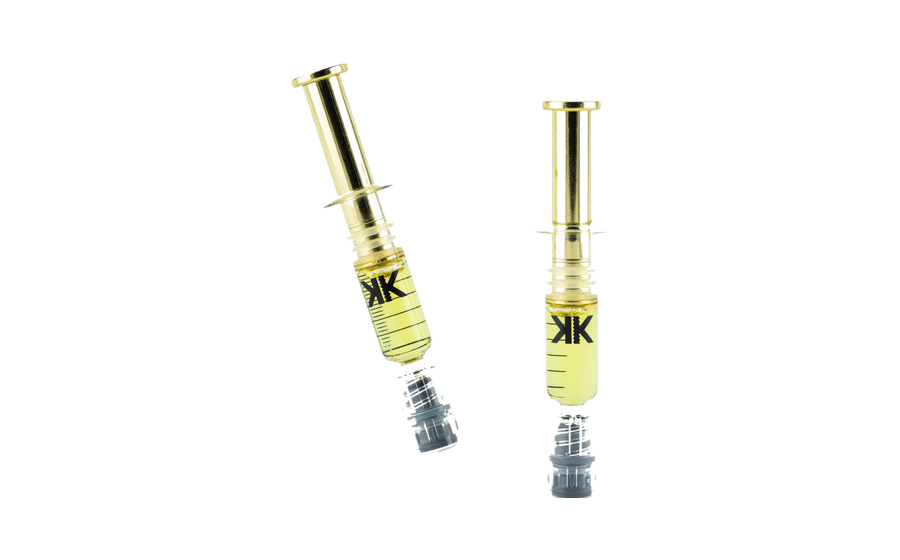
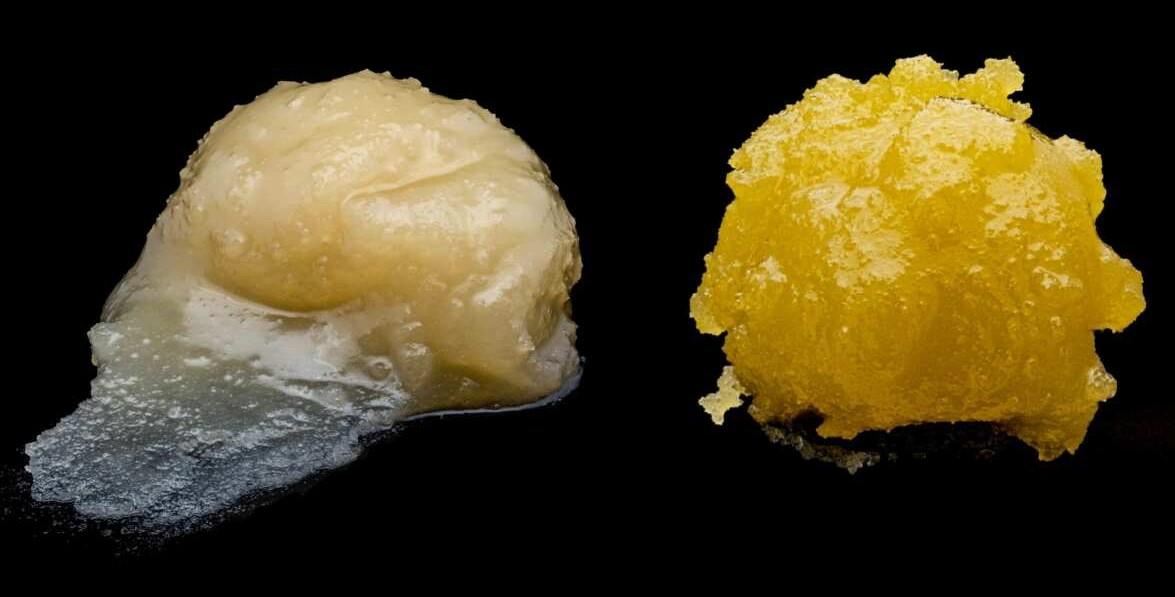
What "live" means for both
Most cannabis is dried and cured after harvest. Live products skip that step: Weedmaps says the plants are flash-frozen right after harvest to preserve their terpene and cannabinoid profiles, because many concentrates lose a significant share of their terpenes during drying and curing. Weedmaps also calls fresh-frozen plant material the standard input for both live resin and live rosin, and Leafly notes that when dried material is used, the result is simply rosin or resin.
So "live" describes the starting material, not the extraction. Everything else that separates the two comes from what happens after the freezer. For a fuller explainer on one half of the pair, see what live resin is and how it's made.
How live resin is made
Live resin is a solvent extract. Weedmaps describes a closed-loop system in which a solvent, typically butane or a butane and propane mix, passes through the plant material while it stays frozen; leftover solvent is then purged in a vacuum oven over several hours or days, and Weedmaps warns that only licensed professionals should make it.
Producers then finish it in different textures. Weedmaps describes live resin as amber-coloured and usually looser in consistency than other concentrates because of its terpenes, and lists sauce, budder, crumble, shatter and diamonds among the common forms.
How live rosin is made
Live rosin skips the solvent. ACS Laboratory, a US cannabis testing lab, describes the usual route: the plants are flash-frozen, washed in ice water to separate the trichomes into bubble hash, and the hash is dried, sifted and pressed with controlled heat and pressure to squeeze out the oil. Dr. Dabber, a vaporizer maker, explains why the wash comes first: pressing frozen plants directly would bring a lot of extra moisture along.
The process needs only ice, water, heat and pressure, as Wikipedia notes for hash rosin. Leafly describes two common finishes: fresh press, which is simply freshly pressed, and cold cure, which is aged in a freezer after pressing and is more stable at room temperature, less likely to change colour, consistency and taste.
Live resin vs live rosin, side by side
- Starting material: both use fresh-frozen plants.
- Extraction: live resin dissolves the resin in butane or propane in a closed loop; live rosin collects trichomes in ice water, then presses them with heat and pressure.
- Solvent: live resin has to be purged, and the Canadian Centre on Substance Use and Addiction (CCSA) notes that some residual solvent can be left in the final extract when solvents are used. A lab report that covers residual solvents shows how well it was purged. Leafly describes live rosin as a solventless concentrate, extracted with heat and pressure.
- Yield: Wikipedia puts hash rosin yields at roughly 0.3% to 8%, against 10% to 20% for hydrocarbon extraction.
- Price: Leafly says rosin and live rosin are made by hand and typically cost more than live resin; Weedmaps says live rosin prices tend to be a little higher.
- Textures: live resin comes as sauce, budder, crumble, shatter or diamonds; live rosin as fresh press, cold-cure badder, jam or rosin diamonds (Weedmaps).
- Potency: both are high; across concentrates in general, solvent extracts average somewhat higher, but batches overlap (see below).
Which is stronger, and which tastes better?
Neither method guarantees a stronger product. Puffco says both are highly potent, with the exact figure depending on the starting material and how precisely it was extracted. Across concentrates in general, the US National Institute on Drug Abuse (NIDA) cites average THC levels of about 54% to 69% for solvent-based products and 39% to 60% for solventless ones, but individual batches overlap, so the label is the number that matters.
On flavour, the sources disagree. Puffco says live resin typically has the more pronounced taste and aroma, while Dr. Dabber says live rosin often tastes better and contains more terpenes. Both companies sell dabbing gear, and neither points to a side-by-side test. Claims that terpenes shape the effects, the so-called entourage effect, remain unproven: Wikipedia's entry on the entourage effect calls it a hypothesis and notes that a 2020 review found no entourage effect in most studies.
Which should you pick?
It comes down to what you value. If you want a concentrate made with no solvent at all and do not mind paying more, live rosin fits. If price matters more, live resin is usually the cheaper of the two, and it is also sold in vape cartridges, which Weedmaps calls the easiest way to try it. For how both fit among other extracts, see cannabis concentrates 101.
Either way, start small. CCSA suggests a first dab about the size of a grain of rice, with at least 10 minutes before taking more, and it advises people new to cannabis to stay away from dabbing because the effects can kick in quickly and be more intense than smoking dried cannabis.
Using and storing them
Both are used the same ways: in a concentrate vaporizer, added to dried flower in a joint, or in a dab rig (CCSA). The step-by-step dabbing guide covers technique and temperature.
Storage matters because the terpenes these products are bought for fade. Leafly advises keeping both fresh press and cold cure live rosin cold. For live resin, Weedmaps suggests an airtight container somewhere cool and dark, or the fridge for longer storage, letting the container reach room temperature before opening so condensation stays out. Dr. Dabber recommends glass over silicone for rosin you plan to keep longer than about a week. Keep any concentrate in a child-resistant container out of reach of children (CCSA).
Buying live resin or live rosin
GasDank offers same-day delivery across Toronto and the GTA, usually within one to two hours, and mail order across Canada. Toronto and Mississauga orders have a $40 minimum, with free delivery from $80 ($15 below that). Local orders are paid by cash on delivery or Interac e-Transfer, and customers must be 19 or older (21 in Quebec), with ID checked at the door. Browse the resin menu; the menu carries lab-tested products.