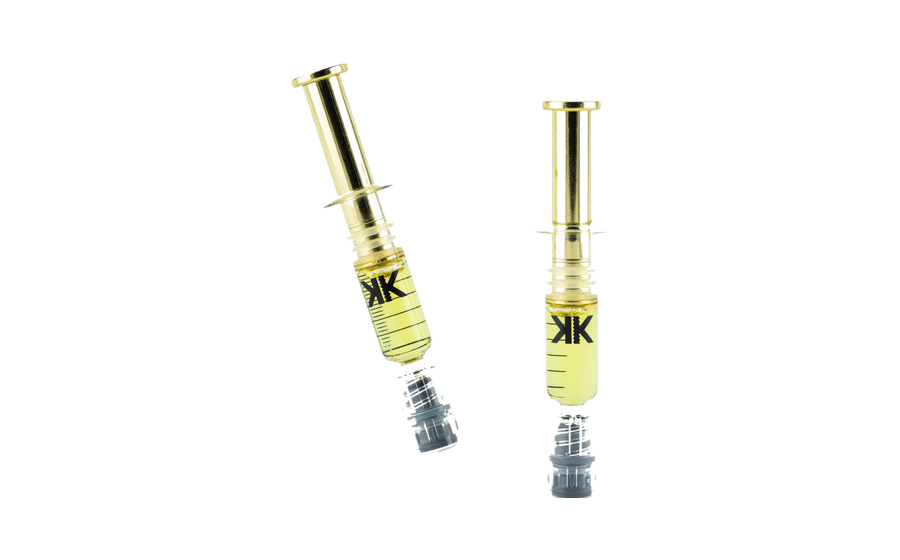
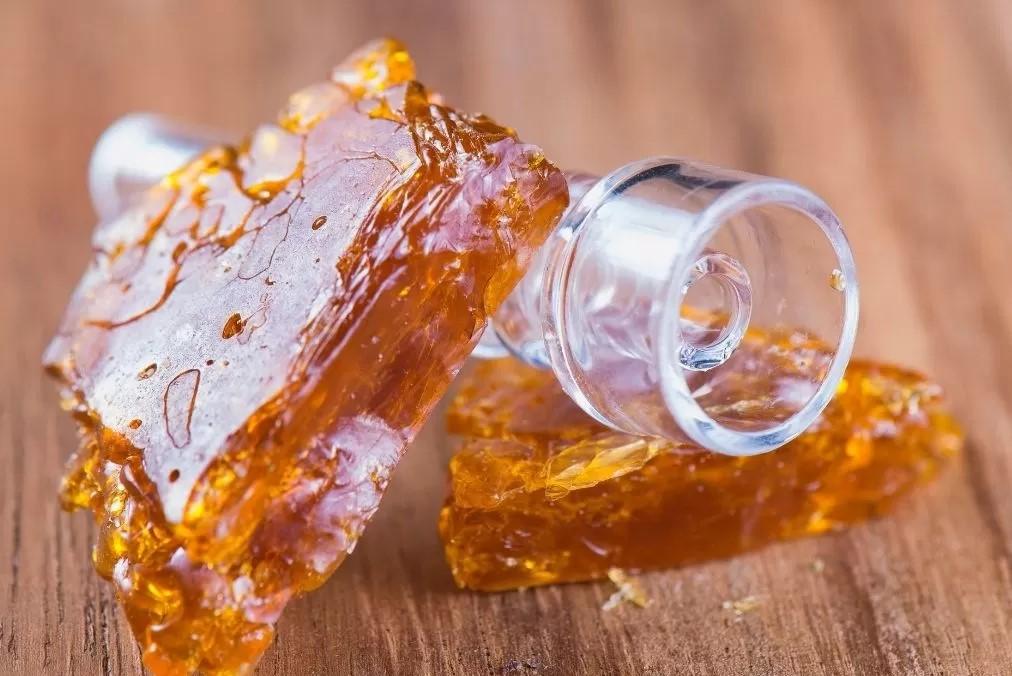
What the "live" in live resin means
Most cannabis is dried and cured after harvest. Live resin skips that step. As Weedmaps explains, extractors flash-freeze the plants immediately after harvest and keep the material frozen throughout extraction. The point is to protect the terpenes, the aromatic compounds that Health Canada says are made and stored in the plant's trichomes alongside the cannabinoids and give cannabis its distinctive smell.
Weedmaps notes that many concentrates lose a significant amount of terpenes during drying and curing, and older research shows how much is lost. In a 1996 University of Mississippi study, buds air-dried at room temperature for a week yielded 31% less volatile oil, the terpene-rich fraction, than fresh buds, and 55% less after a further 3 months in storage. The lighter monoterpenes, led by myrcene and limonene, dropped faster than the heavier sesquiterpenes, although none of the major compounds disappeared completely.
How live resin is made, in general terms
Live resin is a solvent extract, produced in a similar way to butane hash oil. In the Weedmaps description, a solvent, typically butane or a butane and propane mix, is passed through the frozen plant material in a closed-loop system designed to contain it, dissolving the cannabinoids and terpenes. The plant material stays frozen throughout, and the leftover solvent is then purged in a vacuum oven at a low temperature.
This is not something to try at home. Colorado's state cannabis health guidance warns that making hash oil with flammable liquids has caused explosions, severe burns and deaths, and Weedmaps says only licensed professionals should make live resin.
After extraction, producers finish the resin in different ways. Some turn it into textures that are easier to handle, while others let it settle into crystals in a sappy liquid, sold as diamonds and sauce. Weedmaps lists sauce, budder, crumble, shatter and diamonds among the common forms and describes live resin as amber-coloured.
Where live resin came from
Weedmaps credits Colorado extractors William "Kind Bill" Fenger and Jason "Giddy Up" Emo. Fenger had already experimented with extracting flash-frozen plants, and in 2013 he was brought in as a consultant on an EmoTek Labs extraction unit that Emo had installed at a medical dispensary in Colorado Springs. After more than a month of trials they produced a successful batch from flash-frozen whole plants and named both the process and the product live resin.
Live resin vs cured resin, rosin and shatter
The differences come down to the starting material and whether a solvent is used:
- Live resin: fresh-frozen plants, extracted with a cold solvent. Weedmaps says it often has a more intense and complex flavour and aroma than other concentrates.
- Cured resin: a similar solvent extract made from dried and cured plants, which can change the terpene profile and give a more subdued flavour.
- Rosin: no solvent at all. The Weedmaps rosin guide describes it as made by pressing flower, kief or hash with heat and pressure, often between heated plates, so it can be pressed from hash such as bubble hash. Live rosin is the solventless counterpart to live resin and, according to Weedmaps, usually costs a little more; see live resin vs live rosin for a closer comparison.
- Shatter: a butane hash oil purged of solvent into a glassy solid. ACS Laboratory, a US cannabis testing lab, says its terpene levels are generally lower than those of live extracts.
- Distillate: refined to isolate cannabinoids. Weedmaps describes it as virtually odourless and flavourless, with THC or CBD often above 90%.
How people use live resin
Weedmaps lists the options as a vaporizer or dab pen made for concentrates, a dab rig, or a bowl or joint of dried flower. It is also sold as oil in live resin carts, which Weedmaps calls the easiest way to try it. Dabbing is not for beginners: the Canadian Centre on Substance Use and Addiction (CCSA) calls it a complicated and risky method whose effects can kick in quickly, and advises people new to cannabis to stay away from it.
Potency, terpenes and what the evidence shows
Live resin is a concentrate, and Health Canada lists solvent-made extracts at up to 90% THC, against up to 30% for dried flower. Its lower-risk guidance advises new or occasional users to avoid extracts and everyone to start low; CCSA suggests a first dab the size of a grain of rice, then waiting at least 10 minutes before taking more.
You will often see claims that live resin's terpenes shape the high through an "entourage effect". Wikipedia describes the entourage effect as a hypothesis and notes that a 2020 review found no such effect in most studies, so treat live resin as a choice about taste and aroma rather than effects. For medical questions, talk to a doctor or pharmacist.
Buying live resin
GasDank offers same-day delivery across Toronto and the GTA, usually within one to two hours, and mail order across Canada, with no minimum on mail orders and free shipping from $150 ($20 below that). Local orders are paid by cash on delivery or Interac e-Transfer, and mail orders by Interac e-Transfer. Customers must be 19 or older (21 in Quebec), with ID checked at the door. Browse the resin category.