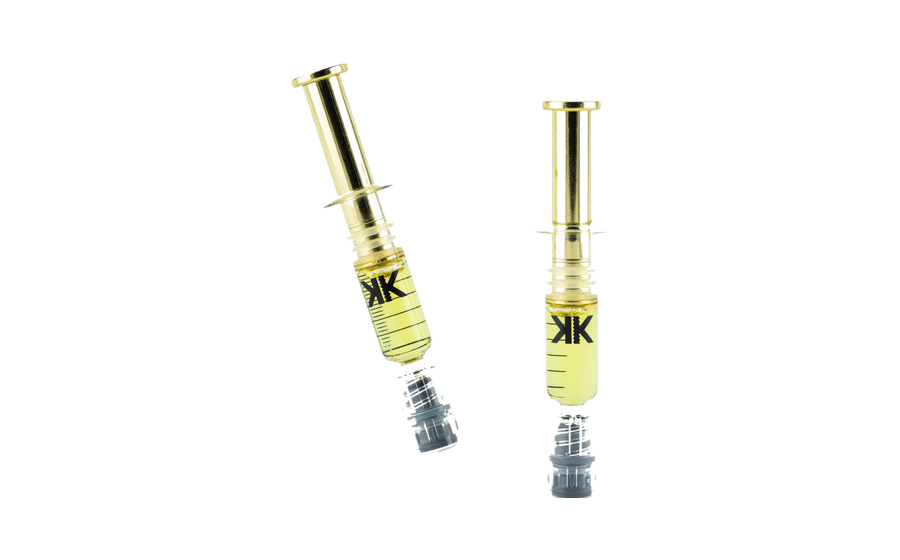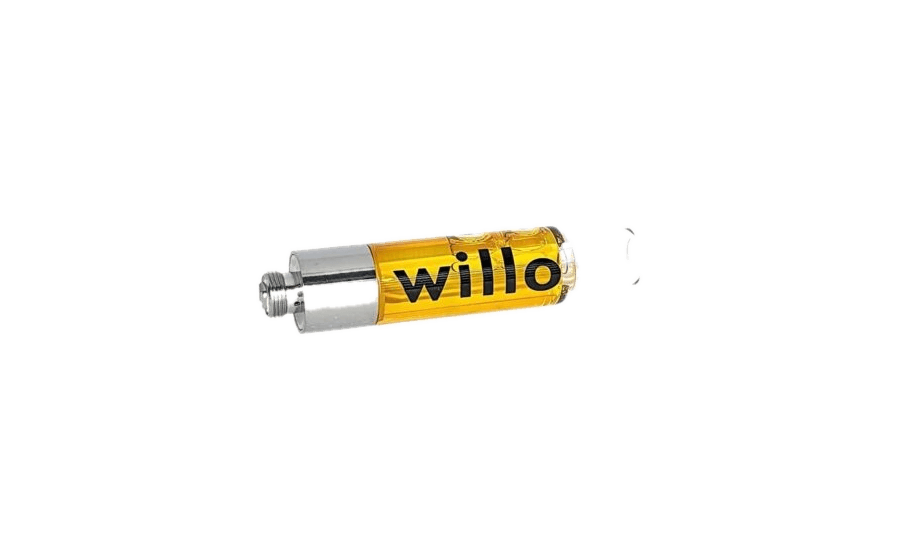
What a live resin cart is
A vape cartridge is a small plastic or glass tube of cannabis extract. It attaches to a battery, which powers an atomizer in the cartridge to make the vapour you inhale, as cannabis researchers writing in ACS Omega describe. In a live resin cart, the extract comes from live resin, made from plants frozen at harvest, so it tends to taste and smell more like the original flower.
Not every live resin cart is filled with resin straight from the extractor: many blend live resin, or terpenes and minor cannabinoids taken from fresh-frozen plants, with refined THC or CBD. That is why the ingredient list and lab report tell you more than the name on the box.
Live resin vs distillate carts
Distillate is a refined oil with high levels of THC or CBD but fewer minor cannabinoids or terpenes. When terpenes are stripped out during extraction, producers often add them back, sourced from cannabis or other plants. A 2019 study in ACS Omega notes that distillates are often blended with 5 to 15% terpenes, and that cartridges rely on wicking, which calls for neutral THC with added terpenes to thin the oil. Our distillate pen guide covers that side of the shelf.
The 2019 vaping lung injury outbreak
Any look at carts has to start with safety. In 2019 the United States saw an outbreak of e-cigarette or vaping product use-associated lung injury (EVALI). By February 18, 2020, the US Centers for Disease Control and Prevention had recorded 2,807 hospitalized cases or deaths, including 68 deaths. The CDC concluded that vitamin E acetate, an additive used in some THC vapes, was strongly linked to the outbreak: it was found in lung fluid from 48 of 51 patients in one study and not in a comparison group without EVALI. Most cases were tied to THC products from informal sources such as friends, family or dealers.
Canada had a small number of cases, with some hospitalizations and no deaths reported, and Health Canada says the investigation here found no common cause. Its advice is not to use vaping products of unknown content or origin, even if they come from someone you know. Untested cart oils can hide cutting agents like vitamin E acetate, which is why lab results matter. Under Canada's cannabis vaping rules, vitamins, including vitamin E acetate, are not allowed in cannabis extracts, and packages must list THC and CBD content and ingredients.
How to judge a live resin cart
Five checks before you buy:
- Ingredients: look for cannabis extract and cannabis-derived terpenes. Thinning agents such as propylene glycol or vegetable glycerin mean the oil is not pure live resin, and the ACS Omega study notes that carrier liquids like these are not typically included in cannabis extracts for vaping because they are considered undesirable. Vitamin E acetate should never appear.
- Lab report: buy carts that are lab tested, from a seller that shows the results: ideally a certificate of analysis covering potency and checks for pesticides, heavy metals and microbes. Match the lot number on the package to the report.
- Potency: THC and CBD should be printed on the package. The Canadian Centre on Substance Use and Addiction notes that cannabis extracts, which include vape oils, can reach up to 99% THC, compared with the 10% to 25% typical of dried buds.
- Contaminants: Health Canada warns that heavy metals may leach into cannabis extracts and be inhaled in the aerosol, one more reason lab results matter.
- Origin: a cart with no ingredient list, no lot number or no maker you can identify is a product of unknown content or origin, which Health Canada says not to use.
Hardware basics: 510 thread, batteries and voltage
Most cart batteries are 510-thread, and 510 carts are among the most popular formats because they fit those widely available batteries. Not every 510 cart works with every 510 battery, though, and closed-loop pods only fit their own brand's battery. Our guide to buying 510 cartridges goes further.
Voltage changes what you inhale. In the same 2019 ACS Omega study, a cart of THC with added terpenes produced about 1 nanogram of benzene per puff at 3.2 volts and about 36 nanograms at 4.8 volts, and methacrolein rose the same way. The researchers also found that added terpenes increased these by-products. If your battery has settings, start at the lowest.
Health Canada's battery advice: don't modify the device, use the batteries and charging times the manufacturer recommends, keep spare lithium-ion batteries away from coins and keys, and choose devices certified to a safety standard such as ANSI/CAN/UL 8139. A few habits help too: avoid long, repeated pulls, which can overheat a vape; store carts somewhere cool and dry with the cart taken off the battery; and never ingest oil from a leaking cart.
Your first puff
Cart oil is a concentrate. Health Canada's lower-risk guidance suggests starting with 1 or 2 puffs of a product with 10% THC or less, says inhaled effects can take up to 30 minutes to peak, and advises new or occasional users to avoid extracts altogether. With carts that can pass 90% THC, take a single small puff and wait before deciding on another. If you have a medical condition or take medication, ask a doctor or pharmacist first.
Buying live resin carts
The GasDank menu carries lab-tested products. Same-day delivery covers Toronto and the GTA, usually within one to two hours, with mail order across Canada. Toronto and Mississauga orders have a $40 minimum (free delivery from $80, $15 below that), and outer GTA orders a $60 minimum (free from $160, $20 below that). Customers must be 19 or older (21 in Quebec), with ID checked at the door. Browse cartridges and pens or batteries.