What shatter is
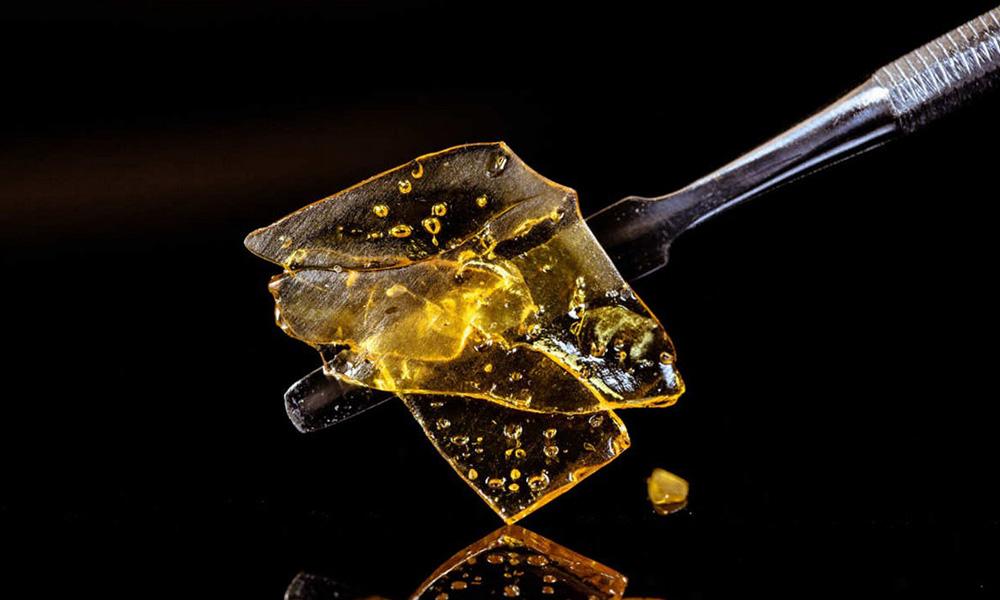
Shatter is a cannabis extract known for its glass-like, brittle texture and high potency, as Leafly describes it. It is a form of butane hash oil, or BHO, the family of concentrates made with butane as the solvent. A typical slab is golden and translucent, and it breaks cleanly into pieces instead of bending, hence the name.
Hash oil comes in several textures depending on how it is handled. Wikipedia lists shatter (a solid that breaks easily, like glass), pull and snap (bendable but still breakable), crumble, and budder or wax (soft, with a consistency like peanut butter). The Canadian Centre on Substance Use and Addiction (CCSA) notes that extracts such as shatter, wax, honeycomb and budder are simply named for how they look and feel.
How shatter is made
In general terms, butane is used to extract the cannabinoid- and terpene-rich trichomes, the tiny resin glands on the buds. The oil is then collected and purged of leftover butane, often in a vacuum chamber, and what is left sets into a hard, glassy sheet (Leafly). Some producers add further purging steps, known as winterizing or de-waxing, to remove plant wax, according to an Ontario Fire Marshal investigator writing in Blue Line.
Whether the result is shatter or a softer texture comes down mostly to handling after extraction. Shatter is left undisturbed so it sets hard and glassy, while wax is agitated, or whipped, until it turns soft and opaque, and neither is necessarily higher in THC than the other (Leafly). Commercial extractors generally use closed-loop equipment, unlike the amateur open "blasting" set-ups described in a 2018 peer-reviewed review of butane hash oil.
Do not try this at home. As Justice Canada explains, adults may make cannabis products at home only as long as organic solvents are not used to create concentrated products, and butane is an organic solvent (Wikipedia). It is also dangerous: butane released during amateur extraction can collect in an enclosed space and explode if a spark or static electricity ignites it (2018 review), and Ontario's fire marshal investigated 39 fire and explosion incidents involving butane hash oil extraction between 2012 and April 2018 (Blue Line).
How strong is shatter?
Very strong. Leafly says shatter may test upward of 80% to 90% THC, while the high watermark for flower sits around 30%, and Wikipedia puts hashish anywhere from almost none to 65%. CCSA adds that some extracts reach 99% THC, against the 10% to 25% typical of dried buds. Potency varies from batch to batch, so read the label instead of going by the product type.
That strength cuts both ways. Inhaled cannabis can be felt within seconds to minutes and its effects can last up to 6 hours (Health Canada), and high-strength extracts raise the risk of over-intoxication, with symptoms such as severe anxiety, vomiting and paranoia (CCSA). Canada's Lower-Risk Cannabis Use Guidelines link higher THC potency to more acute and long-term problems, including mental health problems, cannabis use disorder and injuries, and CCSA warns that daily use of extracts like shatter builds tolerance and can lead to dependence.
Shatter vs wax, honey oil and solventless hash
Shatter, wax, budder and crumble are close relatives: all are butane hash oil, and the differences are mostly texture and handling (Leafly, Wikipedia). Honey oil is a long-standing name for the same family of extracts: Wikipedia traces so-called butane honey oil back to the 1970s.
Solventless concentrates skip the butane entirely. Bubble hash is made by washing trichomes off the plant in ice water and straining them through screens, and hash rosin is pressed out of that hash with heat and pressure; Wikipedia describes hash rosin as needing only ice, water, heat and pressure. If avoiding solvents matters to you, those are the formats to compare, and the rosin vs resin comparison explains the differences.
How to use shatter
There are 3 common ways to use it:
- In a joint. A small piece is added to dried flower before rolling. It raises the strength of the whole joint, so a little goes a long way.
- Vaporizing. Use a concentrate vaporizer, or a flower vaporizer with a concentrate attachment.
- Dabbing. A dab rig, a heated nail, a torch and a dab tool are used to flash-vaporize a small amount (CCSA). CCSA advises people who are new to cannabis not to dab, because the effects can kick in quickly and be more intense than smoking dried cannabis.
Dabbing and dosing: start low
A dab is meant to be inhaled in a single breath, which delivers a large dose at once (2018 review). CCSA also points to emerging evidence of health issues from new chemical compounds that can form when extracts are heated to a high temperature, another reason not to overheat the nail. The dabbing guide explains the equipment. Whatever the method, these steps keep the risk down:
- Start with a piece smaller than a lentil. If you dab, CCSA suggests a grain-of-rice amount and waiting at least 10 minutes before taking more.
- If you vape, take 1 puff and wait 5 minutes (CCSA).
- If you are new to cannabis, CCSA recommends avoiding high-strength extracts and starting with 1 or 2 puffs of a vape with 10% THC or less.
- Do not drive or operate machinery for at least 6 hours after use, and do not combine cannabis with alcohol (Lower-Risk Cannabis Use Guidelines).
- If someone has taken too much and feels unwell, contact a poison centre or get medical help (CCSA). For medical questions about cannabis, including how it interacts with medications, talk to a doctor or pharmacist.
How to store shatter
Extracts are sensitive to heat and can break down (CCSA), and hash oil exposed to air, warmth and light loses its taste and potency as it ages (Wikipedia). Keep shatter sealed somewhere cool and dark, in a labelled child-resistant container that stays out of sight and reach of children; CCSA suggests a lockbox.
Buying shatter
Check the THC figure on the label and buy an amount you will use while it is fresh. GasDank delivers same-day across Toronto and the GTA, usually within 1 to 2 hours, and ships mail order across Canada. Browse the shatter menu; the menu carries lab-tested products. In Toronto and Mississauga the minimum order is $40, with free delivery from $80 ($15 below that). Local orders are paid by cash on delivery or Interac e-Transfer, and customers must be 19 or older (21 in Quebec), with ID checked at the door.