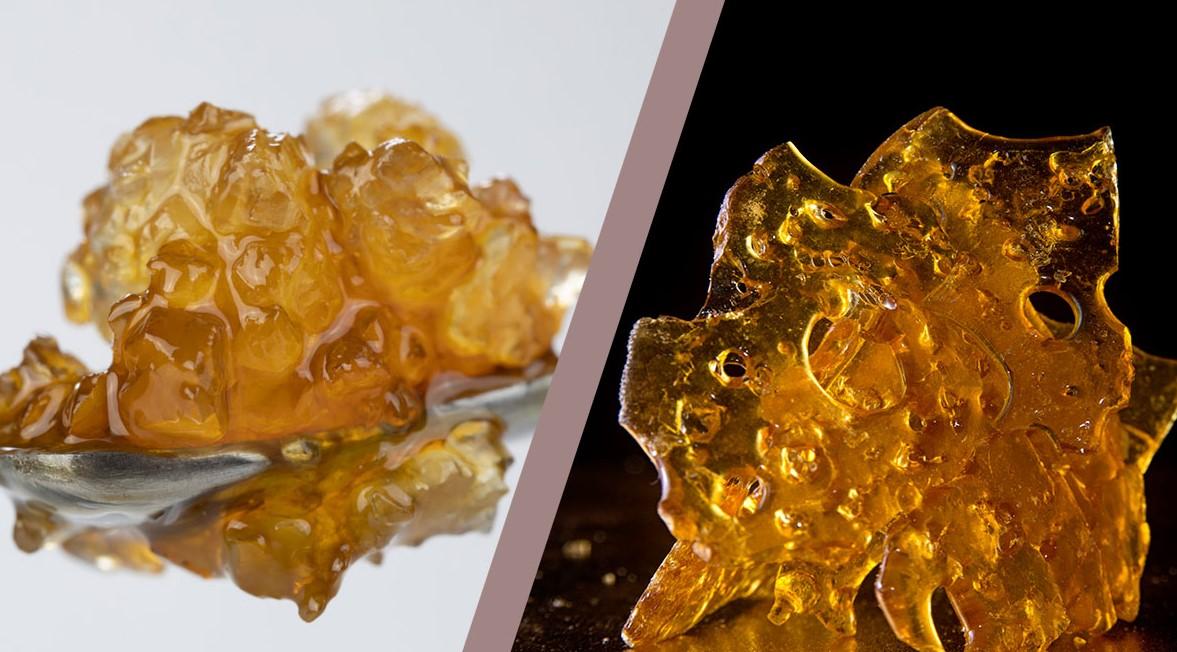
Same extract, two finishes
Both are forms of butane hash oil (BHO), concentrates made by pushing butane through cannabis plant material to strip off compounds such as THC and CBD, as Leafly explains. The extraction is similar for both; Leafly says an extract that is agitated during processing tends to turn opaque, as opposed to glass-like shatter.
Chemically they are close. Leafly describes shatter and wax as hardly different on a chemical level, with the difference coming mainly from how the molecules settle after extraction. A 2017 Portland State University study of dabbing makes the same point: small differences in processing give BHO the consistencies known as shatter, budder, crumble, pull-and-snap and wax. For more on each, see what shatter is and how it's made and the weed wax guide.
How agitation and moisture turn the oil into wax
After extraction, handling decides the final texture. HelloMD lists three factors: the temperature of the heating process, the amount of moisture in the plant material, and any agitation or stirring before the solvent is purged. It says wax results from crystallization caused by agitation, through stirring or rapid heating, while shatter is the brittle, clear, almost glass-like result.
ACS Laboratory, a US cannabis testing lab, describes the same split from the producer's side. For shatter, the oil is heated in a controlled way and left mostly undisturbed so its molecules stay tightly aligned, which lets light pass through. For wax, the oil is heated and agitated, which introduces air and breaks up that glassy structure. Leafly adds that differences in moisture and lipid content explain why waxes come in so many textures.
That describes commercial production, not a recipe. Federal law lets adults make cannabis products at home only if organic solvents are not used to make concentrates (Justice Canada), and Leafly warns that making wax with butane at home is extremely dangerous because the fumes are flammable.
Shatter vs wax at a glance
- Look: shatter is translucent and glass-like; wax is opaque and soft (ACS Laboratory).
- Feel: shatter breaks easily when cool, though HelloMD notes it can turn pliable when warm; wax ranges from a thick, sticky paste to something close to candle wax.
- Potency: comparable. Leafly says a glassy or waxy look tells you nothing about how much THC a concentrate contains.
- Shelf life: ACS Laboratory credits shatter's stable structure with a longer shelf life. Whipped textures can change over time: Weedmaps notes budder can develop small THCA crystals, especially with temperature swings.
- Handling: ACS says shatter's rigid texture makes it harder to handle than softer concentrates such as wax, which it describes as soft and malleable.
Handling and portioning
Shatter is snapped into small pieces, and warmth can make it bend instead of break. Wax is picked up with a dab tool. Either way, the amount should be tiny: the Canadian Centre on Substance Use and Addiction (CCSA) suggests a dab the size of a grain of rice, then waiting at least 10 minutes before taking more.
Both are high-strength products. Health Canada lists shatter, budder and wax as the most highly concentrated extracts, at up to 90% THC, compared with up to 30% for dried flower, and its lower-risk advice tells new or occasional users to avoid extracts altogether. CCSA lists severe anxiety, vomiting and paranoia among the signs of taking too much; anyone who feels unwell after using cannabis can call a poison centre or get medical help. For medical questions, talk to a doctor or pharmacist.
How each is used
They are used the same ways: Leafly says wax can be dabbed, vaporized, or added to a bowl, joint or blunt, and CCSA notes that extracts are typically smoked or vaporized and that some can be added to dried flower. CCSA does not recommend dabbing for people new to cannabis, since its effects can kick in quickly and be more intense than smoking dried cannabis.
Neither belongs in an ordinary vape pen. Weedmaps says pens made for nicotine are not built for thick concentrates, and ACS says standard vape pens don't usually handle wax well, while shatter needs consistently high heat that can damage pens not designed for concentrates. A dab pen, which Health Canada describes as a device that melts solid and semi-solid extracts, handles both. The step-by-step dabbing guide covers rigs, e-rigs and dab pens.
Storing shatter and wax
Heat is the main enemy of both. CCSA says extracts are sensitive to heat and can break down, and Wikipedia notes that hash oil exposed to air, warmth and light loses its taste and potency as it ages. For whipped textures, Weedmaps suggests the fridge for short-term storage and the freezer for longer, in airtight, opaque containers, without moving them back and forth between warm and cold.
Keep either one labelled, in a child-resistant container that is resealed after use, and out of sight and reach of children; CCSA suggests a lockbox.
Which should you choose?
Choose on handling, not strength; the choice comes down to preference. Shatter suits people who care about a longer shelf life; wax suits people who want something soft and easy to handle. Whichever you buy, check the THC figure on the label instead of going by texture.
Buying shatter or wax
GasDank offers same-day delivery across Toronto and the GTA, usually within one to two hours, and mail order across Canada. In Toronto and Mississauga the minimum order is $40, with free delivery from $80 ($15 below that). Local orders are paid by cash on delivery or Interac e-Transfer, and customers must be 19 or older (21 in Quebec), with ID checked at the door. Browse the shatter menu or the wider concentrates menu; the menu carries lab-tested products.