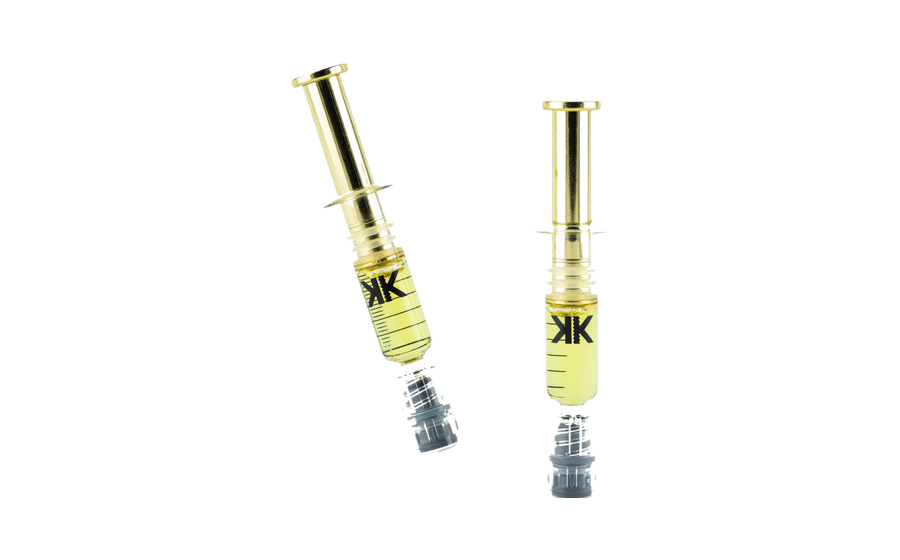
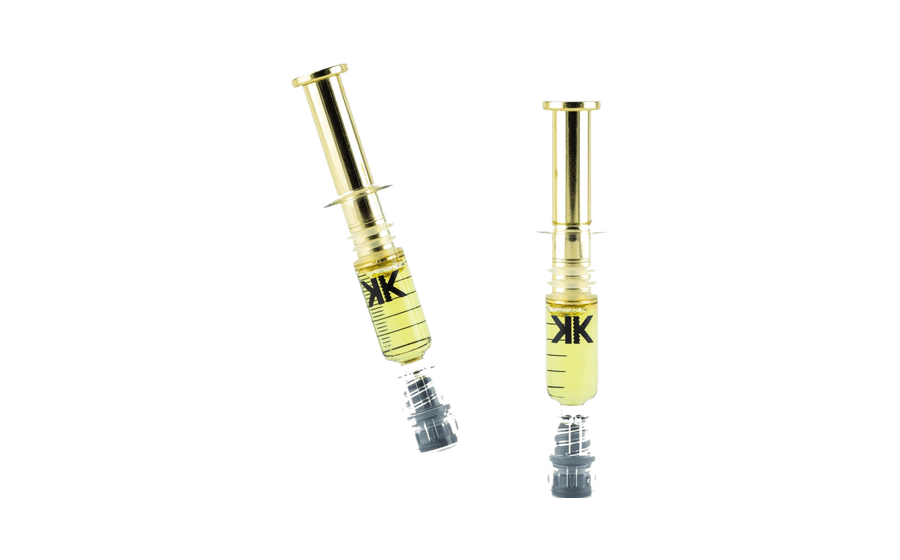
Match the concentrate to how you will use it
Concentrate names describe a texture or a production method, not a strength, so start with the gear you have.
- Dab rig: Health Canada lists wax, hash, rosin, shatter, live resin, budder, butane hash oil and crumble as dab rig extracts. Our dabbing guide covers the setup.
- Dab pen: melts solid and semi-solid extracts rather than liquids or oil, Health Canada notes, so shatter, wax, budder and crumble fit and vape oil does not.
- Joint or pipe: hash and kief can be smoked on their own or mixed with dried cannabis, according to a 2020 review by the Canadian Centre on Substance Use and Addiction (CCSA).
- Battery only: look for a pre-filled cartridge or disposable pen instead of a solid concentrate.
The main types at a glance
Cannabis Concentrates 101 profiles each type in full. Here is the buyer's short version, with the typical THC levels from CCSA's review. Notice how much they overlap: the type alone tells you little about strength.
- Shatter: an amber, glass-like solvent extract; about 70% THC. Our shatter vs wax comparison covers shelf life and handling.
- Wax, budder and crumble: solvent extracts named for their consistency, crumble being the drier form and budder the moister one; 26 to 70%.
- Live resin: made like wax, but from plants frozen immediately after harvest; 40 to 50%.
- Rosin: pressed from flower, kief or hash with heat; about 70%, though CCSA notes its strength has yet to be scientifically tested.
- Hash and kief: compressed or sifted trichomes; 40 to 80% for hash, 40 to 50% for kief. See our guide to buying hash online.
- Vape cartridges and disposables: 70 to 95% for high-THC oils.
What the THC number on the label means
Health Canada's guide to cannabis labels says the front of a package must show Total THC and Total CBD; for a concentrate sold by weight, that is in milligrams per gram. Divide by 10 for a percentage (Health Canada's lower-risk advice writes 10% THC as 100 mg/g), so 700 mg/g is 70%. Multiply by the net weight for the package total, as Health Canada's own label example does: a 1 g jar at 700 mg/g holds about 700 mg of THC.
The word Total matters. The plant makes THC in an acid form, THCA, which heat converts to THC (CCSA), and Health Canada requires labels to reflect what a product could yield once THCA converts. That makes Total THC the fair comparison, especially for butane extracts such as shatter and wax: a 2021 study in RSC Advances notes that butane hash oil is made without high heat and contains mostly cannabinoid acids, so a line showing THC alone can understate it.
The figure also belongs to one lot. Health Canada says label values should reflect testing of that lot and calls its certificate of analysis the most accurate estimate of cannabinoid content. Two jars with the same name can test differently; the lot number and packaging date tell you which batch you have.
For scale, Health Canada's lower-risk advice for smoking or vaping is to start with 1 or 2 puffs of a product at 100 mg/g or less, and it suggests that new or occasional users avoid extracts such as hash, kief, wax and shatter. A 700 mg/g concentrate is seven times that starting strength.
Solvent or solventless: what changes for a buyer
Solvent-based concentrates are made by dissolving the plant's resin and then removing the solvent. A 2022 review in Frontiers in Natural Products names ethanol as the most widely used, with butane, propane, hexane and CO2 also common, and Health Canada groups shatter, budder and wax as extracts made with solvents such as butane. Solventless products rely on dry processing, water or heat and pressure, methods listed by the US National Institute on Drug Abuse (NIDA); kief, hash and rosin are the common ones.
What matters to you is what can be left behind. CCSA's guide to cannabis extracts notes that solvent extraction can leave residual solvent in the product, and NIDA cites a study in which 80% of tested concentrate samples were contaminated in some form, with pesticides or with solvents that had not been fully purged. For a solvent extract, look for lab results that cover residual solvents as well as potency. Solventless products cannot carry solvent residue, but NIDA points out that pesticides are a concern for dried bud too, so testing still matters.
Method also shows up in price and flavour: CCSA says live resin's fresh-frozen start gives it a more intense and complex smell and taste, and makes it more expensive than typical wax and budder. The live resin vs live rosin comparison sets the solvent and solventless versions side by side.
How much to buy, and how much to try first
Buy the smallest size on offer the first time; at 700 mg/g, a single gram holds about 700 mg of THC. CCSA suggests starting with a dab the size of a grain of rice and waiting at least 10 minutes before more, or, with a concentrate vape, one puff and a five-minute wait.
Health Canada says inhaled effects come on within seconds to minutes and can take up to 30 minutes to peak, so a second dab taken too soon stacks on the first. A dab is also usually inhaled in a single breath, and CCSA does not recommend dabbing for people new to cannabis.
Canada's Lower-Risk Cannabis Use Guidelines note that concentrates contain extremely high THC levels, advise choosing lower-THC products, and say not to drive for at least 6 hours after using cannabis. CCSA lists severe anxiety, vomiting and paranoia among the signs of over-intoxication; if someone feels unwell, contact a poison centre or get medical help. For medical questions, including medication interactions, talk to a doctor or pharmacist.
Storing what you buy
CCSA notes that extracts are sensitive to heat and can break down, and Health Canada requires labels to state storage conditions such as temperature, light and humidity, so follow the package. Age counts too: the RSC Advances authors note that THC oxidizes into cannabinol (CBN) during storage, and CBN has only limited psychoactivity compared with THC. Buy what you will use while it is fresh.
Keep concentrates in their original packaging, locked away and out of sight and reach of children and pets, as Health Canada's safe storage advice recommends. CCSA's 2020 review cites a 2017 systematic review that found resin was the cannabis product most often ingested by children.
Buying concentrates from GasDank
GasDank offers same-day delivery across Toronto and the GTA, usually within one to two hours, and mail order across Canada. Toronto and Mississauga orders have a $40 minimum, with free delivery from $80 ($15 below that); outer GTA orders have a $60 minimum, free from $160 ($20 below that); mail orders have no minimum and ship free from $150 ($20 below that). Customers must be 19 or older (21 in Quebec), with ID checked at the door. The menu carries lab-tested products; browse concentrates.