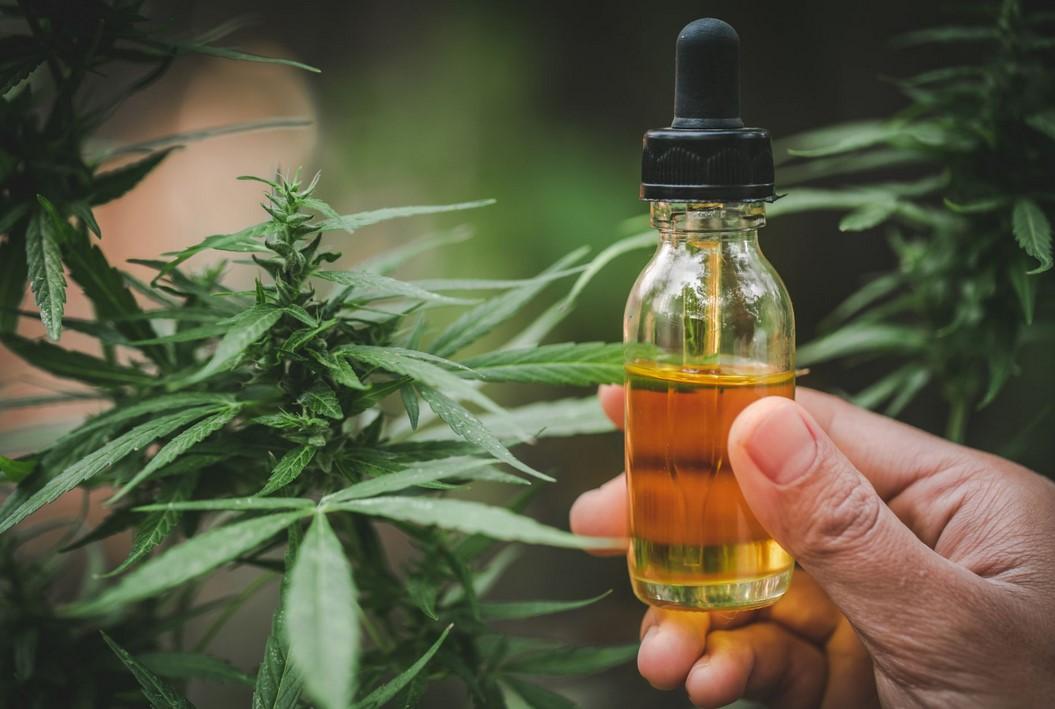
What a cannabis tincture is
A tincture is a liquid cannabis extract. The classic version, sometimes called green dragon, is cannabis soaked in alcohol, which dissolves THC readily: Wikipedia, citing the World Health Organization, puts THC's solubility in ethanol above 1 g per mL. The European Medicines Agency definition it quotes also covers tinctures made with water, glycerol (glycerin), propylene glycol or fatty oils. Tincture of cannabis stayed in the United States Pharmacopoeia until 1942.
In Canada, legal tinctures and cannabis oils are sold as cannabis extracts, with the Total THC and CBD on the front of the label (Health Canada). Bottled cannabis oil is an extract dissolved in a neutral carrier oil such as sunflower, olive or MCT, usually sold with a dropper or spray top. For the glycerin version, see what a cannabis glycerin tincture is.
Under the tongue or in food: how fast it works
Held under the tongue or in the cheek, a tincture can be absorbed through the lining of the mouth into the bloodstream, which Health Canada's guidance for medical users calls dissolving under the tongue. Swallowed, or stirred into food or a drink, it is digested like any edible.
Under the tongue is usually pitched as the faster route, and Health Canada's medical-use guidance does give it a quicker start than eating or drinking: 15 to 40 minutes, though the strongest effects can take 1.5 to 4 hours. Health Canada's consumer information is more cautious, grouping under-the-tongue use with eating and drinking at 30 minutes to 2 hours before effects could begin. For swallowed cannabis, Health Canada gives 30 minutes to 2 hours to begin, up to 4 hours for full effects and up to 12 hours in all, and notes the body turns swallowed THC into a stronger form, 11-hydroxy-THC. Either way the strongest effects can take hours, so give a tincture the same patience as an edible.
How to dose a tincture
Drops are a poor unit, because strength varies between bottles. Dose in milligrams of THC instead: read the total THC for the whole bottle and work out the amount per mL; Health Canada notes that sprays are labelled with the THC per activation.
- Concentration: a 30 mL bottle labelled 300 mg of THC holds 10 mg per mL.
- Starting dose: Health Canada suggests new consumers look for 2.5 mg of THC or less when eating or drinking cannabis, and its guidance for medical users gives the same 2.5 mg starting dose for products dissolved under the tongue.
- Measure: at 10 mg per mL, 0.25 mL is 2.5 mg. Use the dropper's markings or a dosing syringe.
- Wait: the B.C. government says to wait at least 2 hours before taking a second 2.5 mg dose.
Packaged tinctures versus a homemade bottle
Under the Cannabis Regulations, a legal extract may contain no more than 1,000 mg of THC per container, its labelled THC must be accurate to within 85% to 115%, and an extract meant to be eaten may contain ethyl alcohol only in containers of 7.5 g or less. A homemade bottle has none of those checks. More worked examples are in the edibles dosage guide.
Either way, avoid alcohol and other drugs at the same time, which Health Canada says increases impairment and the risk of adverse effects, and do not drive for at least 6 hours, as Canada's Lower-Risk Cannabis Use Guidelines advise. Adverse effects can include a rapid heart rate, dizziness, anxiety, nausea and vomiting. If you have a health condition or take medication, talk to a doctor or pharmacist first.
Making a tincture at home: the legal catch
Canada's Cannabis Act lets adults alter cannabis they may legally possess, but prohibits doing it by the use of an organic solvent, defined as any organic compound that is explosive or highly or extremely flammable, such as petroleum naphtha, butane or propane. Health Canada says the rule exists because of the risk of fire, explosions and health hazards.
Neither the Act nor that guidance mentions drinking alcohol. But ethanol is an organic compound, and PubChem lists it with the hazard statement for highly flammable liquids (H225), so a high-proof alcohol tincture may fall within the ban. Infusing butter or oil avoids the question: Justice Canada says adults can make cannabis products such as food and drinks at home as long as organic solvents are not used to create concentrated products; see the guide to cooking with cannabis.
Working out the strength of a homemade batch
You also can't test the result: Health Canada says there is no convenient way to test homemade extracts and that they may be extra potent. Work out a ceiling instead: the flower's Total THC in mg per gram, times the grams used, divided by the mL of finished tincture. Total THC on a label already counts the THCA that converts with heat (Health Canada). For example, 1 g at 150 mg/g in 30 mL is at most 5 mg per mL, so 0.5 mL holds up to 2.5 mg.
Storing a tincture
THC slowly breaks down into cannabinol (CBN) as it ages, and heat, air and light speed that up, so use a tightly closed dark glass bottle kept somewhere cool, and follow any storage conditions on the product's label. Keep an alcohol tincture away from heat and flames.
Store it locked away and out of sight and reach of children and pets, and label a homemade bottle clearly (Health Canada). If you suspect a child has swallowed some, call 1-844-POISON-X (1-800-463-5060 in Quebec) or 911 (Health Canada); for a pet, call your veterinarian.
Buying instead
If you would rather skip the homemade guesswork, GasDank offers same-day delivery across Toronto and the GTA, usually within 1 to 2 hours, and mail order across Canada, and the menu carries lab-tested products: browse capsules or edibles. Customers must be 19 or older (21 in Quebec), with ID checked at the door.