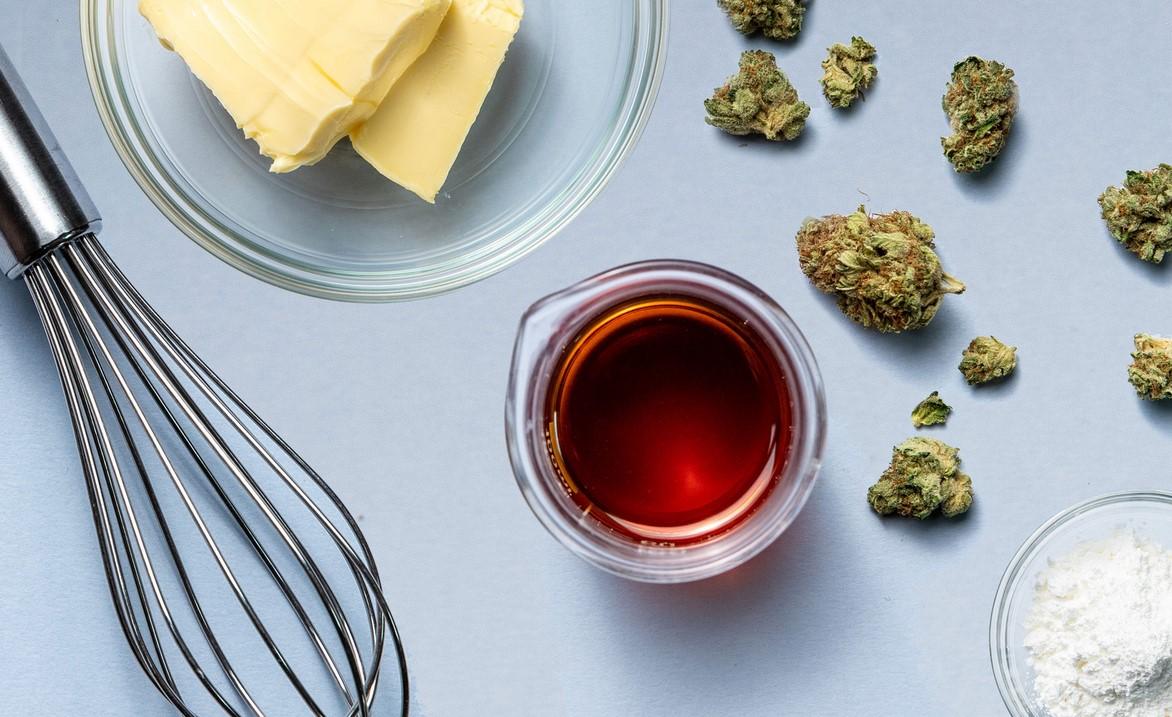
Why These Two Infusions Are the Foundation
If you want to make edibles at home, you do not start by following dessert recipes. You start by making a base infusion, and the two most useful are cannabis coconut oil and an alcohol tincture. Almost every homemade edible begins with one of these. Learn to make them well and you hold the key to infusing practically any food or drink you like, which is why they come first.
The reason is simple chemistry. THC is fat soluble and alcohol soluble, not water soluble, so to get it into food you need to extract it into a fat like coconut oil or into a strong alcohol as a tincture. Once it is held in one of those carriers, you can cook with it, bake with it, or dose it directly. The infusion is the bridge between raw flower and a finished edible.
These two cover most needs between them. Coconut oil is the workhorse for baking and cooking, slipping into anything that uses fat. A tincture is the precise, flexible option for dosing drops under the tongue or stirring into drinks. Together they give a home cook everything needed to make edibles, which is why this guide focuses on getting both right rather than chasing specific recipes.
Decarboxylation Comes First
Before any infusion, you have to decarboxylate your cannabis, and skipping this step is the most common reason homemade edibles fail. Raw flower contains THC in an inactive acidic form that will not get you high. Heat converts it into active THC. Decarbing, as it is called, is the gentle baking step that activates the cannabis so your oil or tincture actually works once you make it.
The method is straightforward. You break up your flower, spread it on a lined baking tray, and bake it low and slow in the oven so it activates without scorching. Too hot and you burn off potency and ruin the flavour, too cool and it does not fully activate. A moderate oven temperature for a stretch of time is the goal, until the flower turns a light golden brown and smells toasty.
Do not rush or skip this. Whether you are making coconut oil or a tincture, decarbed flower is what makes the difference between a potent infusion and a disappointing one. It is worth doing carefully every time. Once your cannabis is properly decarboxylated and cooled, it is ready to go into either infusion, and the rest of the process is mostly patience and straining.
Making Cannabis Coconut Oil
Coconut oil is a favourite base because it is high in fat, which helps it absorb cannabinoids efficiently, and it stays solid at room temperature, which is handy for measuring and storing. To make it, you gently heat your decarbed flower together with coconut oil over low heat for a few hours, letting the THC infuse from the plant into the fat. Low and slow is the rule throughout.
A double boiler or a slow cooker on low works well because they keep the temperature gentle and steady, which protects potency and avoids burning. You want the oil warm enough to infuse but never simmering hard or boiling, since high heat degrades the cannabinoids you are trying to capture. Stir occasionally and keep the heat modest for the whole infusion, giving the fat time to draw the THC out of the flower.
When the infusion time is up, you strain the oil through cheesecloth or a fine strainer to remove the plant material, pressing gently to get all the infused oil out. What is left is cannabis coconut oil, ready to cool and store. That oil is now your all purpose edible ingredient, potent and versatile, and it keeps well for a good while in a sealed jar in a cool, dark place.
What to Do With Cannabis Coconut Oil
The beauty of cannabis coconut oil is how easily it slots into cooking and baking. Anywhere a recipe calls for butter or oil, you can substitute some or all of it with your infused coconut oil to make the dish an edible. That makes it incredibly flexible, suitable for brownies, cookies, and other baked goods as well as plenty of savoury dishes that use fat.
Baking is the classic use, since coconut oil behaves much like butter in many recipes. You can also use it in no bake treats, stir it into warm dishes, or blend it into a hot drink. Because it is just an infused fat, it goes wherever fat goes. This is what makes mastering the oil so valuable, since one batch opens up a huge range of possible edibles from a single ingredient.
You can even use the oil more directly. Some people take it on its own as a measured dose, spread it on toast, or put it into capsules for a consistent, food free option. Its versatility is the whole point. Once you have a jar of cannabis coconut oil, you are no longer tied to any one recipe, since you can infuse just about anything that uses a fat whenever you feel like it.
Making a Cannabis Tincture
A tincture is the other essential base infusion, and it takes a different route. Instead of fat, you extract the cannabinoids into high proof alcohol. You combine your decarbed flower with a strong, food safe alcohol and let it extract, and the alcohol pulls the THC out of the plant into the liquid. The result is a potent, concentrated extract you can dose precisely by the drop.
There are faster and slower ways to do it. A common gentle method is to let the flower steep in the alcohol for a stretch of time, shaking it regularly, then strain it. Some people use cold methods, keeping everything chilled to preserve flavour and produce a cleaner tasting tincture. Either way, the principle is the same, giving the alcohol time to draw the cannabinoids out of the decarbed flower.
Once extraction is done, you strain out the plant material through cheesecloth, leaving a clear, potent liquid. Stored in a dropper bottle in a cool, dark place, a tincture keeps well for a long time thanks to the alcohol. That dropper is the key to its appeal, since it lets you take small, controllable amounts rather than committing to a whole portion of food at once.
Why a Tincture Is So Useful
The standout advantage of a tincture is precise, flexible dosing. With a dropper, you can take a small amount and adjust easily, which makes it far simpler to control your dose than guessing with a baked treat. You can place drops under your tongue for a faster onset, or add them to almost any food or drink to turn it into an edible without any cooking at all.
That no cook flexibility is a big deal. Want to infuse a glass of juice, a cup of tea, a smoothie, or a finished plate of food? A few drops of tincture does it instantly, with no oven and no recipe required. It is the most convenient way to add cannabis to something on the fly, which makes a tincture a perfect companion to coconut oil rather than a competitor.
Tinctures are also discreet and portable. A small dropper bottle is easy to carry and easy to use quietly, and because it is liquid, it absorbs cleanly into drinks and food. For anyone who values control over their dose and the freedom to infuse anything without cooking, a tincture is one of the most practical tools in the home edible maker's kit, sitting right alongside the oil.
Dosing Homemade Edibles Safely
Dosing is the trickiest part of homemade edibles, and it deserves real care. The challenge is that you usually do not know the exact strength of your infusion, since potency depends on the flower you used and how the infusion went. We never publish fake numbers, and you cannot assume a precise figure at home, so you have to treat your first batch as an experiment and find your dose carefully.
The safest approach is to start very low and go slow. Eat a small amount, then wait. Edibles take a while to kick in, often well over an hour, because they have to be digested before the effects arrive. That delay is exactly why people overdo it, eating more because nothing has happened yet, only to be hit hard later. Patience is the single most important rule with any edible.
Keep notes on what you make and how it affects you so you can dial in your dose over time. Once you know roughly how strong a given batch is for you, you can portion accordingly. A tincture makes this easier because of the dropper, but even with oil based edibles, starting small and waiting fully before having more keeps the experience pleasant and in your control rather than overwhelming.
Coconut Oil or Tincture, Which to Choose
These two infusions are not rivals, they are partners, but each shines in different situations. Reach for coconut oil when you want to bake or cook, since it behaves like a fat and folds naturally into recipes that use butter or oil. If your plan is brownies, cookies, or any warm savoury dish, the oil is the obvious base to work with for a proper infused result.
Reach for a tincture when you want precision and convenience without cooking. The dropper lets you control your dose closely, and you can add it to drinks or finished food instantly. If you want to infuse a single cup of tea, dose discreetly, or avoid the oven entirely, a tincture is the better fit. It is the tool for flexibility and fine control rather than for baking projects.
Most people who get into edibles end up keeping both on hand. The oil handles your baking and cooking, the tincture handles quick, precise dosing and no cook infusions. Between them you can make almost anything, from a tray of brownies to a single infused drink. Learning both is what turns you from someone following one recipe into someone who can infuse on your own terms.
Storing Your Infusions
Both infusions reward proper storage. Cannabis coconut oil should be kept in an airtight container, such as a sealed jar, in a cool, dark place. Light, heat, and air degrade cannabinoids over time, so a cupboard away from the stove and out of direct sun is ideal. Stored well, the oil holds its potency for a good while and is ready whenever you want to bake or cook with it.
A tincture stores even more easily thanks to the alcohol, which acts as a natural preservative. Keep it in a dark dropper bottle in a cool, dark spot and it will last a long time. Dark glass helps protect it from light, which is one of the main things that breaks down the cannabinoids. A well stored tincture stays potent and ready to dose for months on end.
Label your infusions with the date you made them, and if you have a rough idea of strength, note that too. This is especially helpful if you make different batches, so you do not lose track of which is which or how strong each one is. A little organization prevents mix ups and makes it easy to dose consistently from the same batch over time without guesswork.
Common Mistakes to Avoid
The number one mistake is skipping or rushing decarboxylation. Without it, your infusion will be weak or inactive no matter how carefully you do everything else, because the THC never gets activated. Take the time to decarb your flower properly and gently before infusing. It is the foundation the whole process rests on, and getting it wrong undermines all the effort that follows.
The second big mistake is using too much heat during infusion. High temperatures destroy the very cannabinoids you are trying to capture, so a hard simmer or a boil works against you. Keep both the oil and the tincture process gentle, with low, steady heat for the oil and no harsh heat for the alcohol. Patience at a low temperature beats speed at a high one every time.
The third is impatience with dosing. People eat more than they should because the effects are slow to arrive, then end up uncomfortable. Start small, wait it out fully, and learn how your batch affects you before increasing your dose. Avoid these three pitfalls, decarb properly, keep the heat low, and dose with patience, and your homemade infusions will turn out well far more often than not.
Get Flower for Your Infusions in Toronto
Good infusions start with good flower, and GasDank makes it easy to stock up. We deliver fresh cannabis same day across Toronto and the GTA, covering downtown, Scarborough, North York, Etobicoke, Mississauga, Brampton, Vaughan, Markham, and beyond. Most orders arrive within one to two hours, so you can have the flower you need for your coconut oil or tincture the same day you decide to make a batch.
Ordering is simple. The minimum starts at $40, and delivery is free once you pass $80 ($160 in the outer GTA). Pay with cash on delivery or send an Interac e-Transfer, whichever works for you. First time customers just need valid ID showing they are 19 or older. After that, picking up flower for your next infusion project is quick and painless whenever inspiration strikes in the kitchen.
If you live outside our delivery zone, we also ship across the rest of Canada by mail order, so you can get quality flower for your infusions wherever you are. Whether it arrives by driver in a couple of hours or by mail across the country, it comes fresh and properly stored, which is exactly what you want for a strong, clean infusion. Browse the menu and pick your flower to get started.
Choosing the Right Flower for Infusing
The flower you start with shapes your infusion, so it is worth a little thought. Higher potency flower yields a stronger infusion for the same amount, while milder flower gives a gentler result, which can actually be useful if you want more control over a low dose. There is no single right answer, it depends on how strong you want your finished edibles and how much flower you plan to use.
Flavour carries over too, especially into a tincture and to a lesser degree into oil. A strain with a sweet, pleasant profile can make for a nicer tasting infusion, though chocolate, rich sauces, and other strong flavours in your recipes do a good job of masking any earthy cannabis taste. If flavour matters to you, picking a strain you enjoy the smell of is a reasonable place to start.
You do not need top shelf flower to make good edibles. Decent quality flower infuses perfectly well, and since you are extracting the cannabinoids rather than smoking the bud directly, the appearance matters less than it would for flower you intend to smoke. The key things are that it is properly dried, stored, and decarbed before infusing, since those steps affect your result more than bag appeal does.
Straining and Finishing Your Infusion
Straining is the step that separates a clean infusion from a gritty one. After your oil or tincture has finished infusing, you pour it through cheesecloth or a fine strainer to remove the plant material, leaving just the infused liquid behind. Taking care here keeps bits of flower out of your finished product, which makes for smoother edibles and a more pleasant texture in whatever you go on to make.
With oil, gently pressing the cheesecloth helps you recover the infused fat trapped in the plant material, since that oil is potent and worth getting out. Be careful if the oil is still warm. With a tincture, you simply let it drain through and squeeze out the last of the liquid. In both cases, the goal is to capture as much of the infused liquid as possible while leaving the spent plant matter behind.
Once strained, your infusion is ready to cool and store. Coconut oil will firm up as it cools to room temperature, while a tincture stays liquid. Transfer each to an appropriate container, a sealed jar for the oil and a dropper bottle for the tincture, and you are done. The finished infusion is now your ready to use base, waiting for whenever you want to cook, bake, or dose with it.
Cooking With Heat: What to Watch
Once you have your infusion, how you cook with it affects how well the potency survives. High heat degrades cannabinoids, so the trick is to avoid blasting your infused oil with very high temperatures for long stretches. Most baking happens at a moderate enough temperature to be fine, but deep frying or anything that gets extremely hot can break down the THC and weaken your edible noticeably.
A good habit is to add infused oil at gentler stages where you can. In a sauce, stir it in toward the end off the highest heat rather than boiling it hard for ages. In baking, normal oven temperatures are usually within a safe range, so brownies and cookies generally turn out fine. The aim is simply to avoid prolonged, intense heat that would cook away the strength you worked to capture.
Tinctures call for similar care, though they are often added to finished food or drinks without much cooking at all, which sidesteps the heat issue entirely. If you do add a tincture to something warm, stir it into the finished dish rather than cooking it. Keeping heat moderate and adding your infusion thoughtfully protects the potency, so your edibles end up as strong as you intended rather than mysteriously weak.