What a hemp wick is
Hemp wick is twine made from natural hemp fibres, coated in beeswax and sold on spools. Humboldt Hemp Wick, a maker in California, explains that plain string burns too quickly because it is dry, and that the beeswax coating gives it a slow, steady burn.
The same maker lists 3 thicknesses: 0.5 mm for indoor use, 1 mm for indoor and outdoor use, and 2 mm for outdoor use. If you mostly light up at home, the thinnest is the maker's indoor pick.
Humboldt pitches its wick for lighting cigars, hand-rolled cigarettes, herbs and pipes. If you are rolling your own, see how to roll a joint and the rolling papers guide.
How to use a hemp wick
These steps follow the maker's instructions, with notes for joints and bowls.
- 1. Unwind a little. Pull a short length free from the spool. Keep it short: the beeswax is sticky, and a long loose strand tangles.
- 2. Light the tip. Use a lighter or a match on the free end, and keep the flame away from your hair and clothes.
- 3. Let the flame settle. Give it a moment to form a steady flame. Tilt the wick to make the flame bigger or smaller.
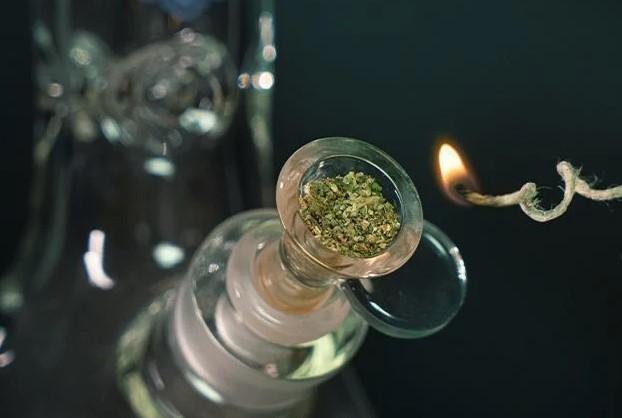
- 4. Light your joint or bowl. For a joint, hold the flame just off the tip and rotate until the end glows evenly; a guide to lighting a joint evenly has more detail. For a pipe or bong, touch the flame to one edge of the bowl while drawing gently, so you light the top layer rather than the whole bowl at once.
- 5. Put it out. Dip the burning end in water or sand, or pinch it with wet fingers. Make sure it is completely out before you rewind it.
Why some people use it instead of a butane lighter
Most of the reasons come from the companies that sell hemp wick. Humboldt markets its wick as a natural alternative to a butane lighter and makes these claims:
- Taste: without the smell of butane, the maker says, the flavour of what you are smoking comes through better.
- Temperature: the maker says hemp wick burns at a lower temperature than a butane lighter.
- No butane by-products: the maker says lighting with a wick avoids breathing in butane fumes.
- Cost and waste: the maker says a spool lasts longer than most lighters and that the wick breaks down naturally, unlike a plastic lighter.
What a wick does not change
Two practical points are easy to check for yourself: a small, steady flame is easy to aim at one edge of a bowl, and one lit wick can handle a few relights.
The smoke itself is the same. Health Canada says cannabis smoke has many of the same harmful chemicals as cigarette smoke, and Canada's Lower-Risk Cannabis Use Guidelines call smoking likely the most hazardous way to use cannabis. A dry-herb vaporizer avoids smoke altogether by heating cannabis without burning it, and the same guidelines list vaporizers among safer inhalation methods, while noting they are not entirely risk-free. More in how to smoke weed with lower risk.
Downsides
A wick is fussier than a lighter in a few ways.
- It takes practice to light and manage, and it is one more open flame to keep track of.
- The beeswax is sticky, so loose wick tangles and can leave residue on your fingers.
- Short pieces are easy to lose.
- Wind is harder on a thin wick; the maker suggests its thickest wick for outdoors.
Safety tips
A lit hemp wick is an open flame, so treat it the way you would a candle.
- Keep the lit wick away from hair, clothing, paper and anything else that catches easily.
- Never leave it burning, and check that it is fully out before it goes back in a pocket or drawer.
- Keep wicks, lighters and cannabis out of reach of children and pets. Health Canada advises storing cannabis locked away.
Buying accessories and papers
GasDank delivers same day across Toronto and the GTA, usually within 1 to 2 hours, and ships mail order across Canada. Browse accessories and rolling papers online. Customers must be 19 or older (21 in Quebec), with ID checked at the door.