Fronto and Backwoods at a Glance
If you spend any time around blunt culture, you will hear fronto and Backwoods mentioned constantly, often in the same breath. Both are tobacco products that people use to roll their cannabis, and both have devoted fans, but they are quite different things. Understanding the difference helps you pick the right one for how you like to smoke.
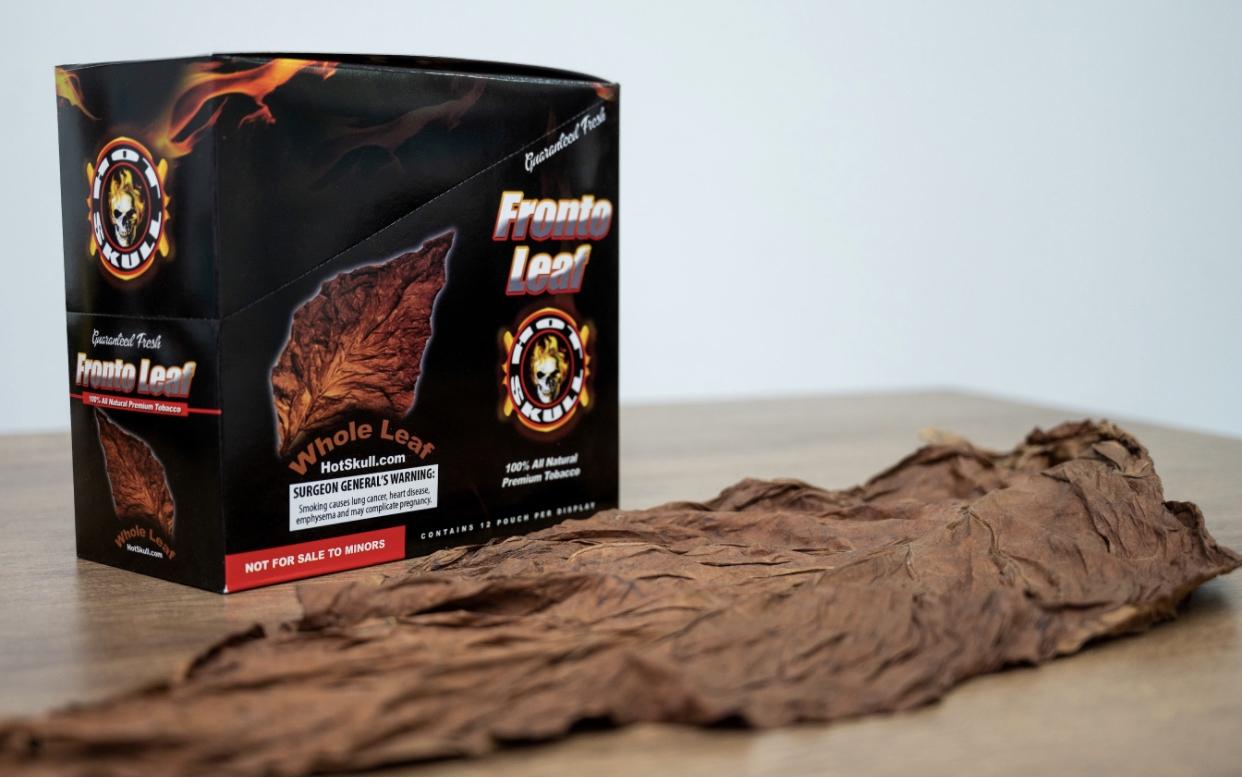
Fronto, also called grabba or whole leaf tobacco, is exactly what it sounds like, a whole dark tobacco leaf sold loose. You cut it, prepare it, and roll with it yourself, which gives you complete control over the size and thickness of your wrap. It is the choice of rollers who want to customise everything and who appreciate a strong, authentic tobacco flavour.
Backwoods, on the other hand, are pre made cigars with a distinctive rustic, natural leaf wrapper. Many people buy them not to smoke as cigars but to carefully unroll, empty, and repack with cannabis, turning the wrapper into a ready made blunt. They offer convenience and a recognisable flavour, which has made them a staple of blunt culture for decades.
What Is Fronto Leaf?
Fronto leaf is whole leaf dark tobacco, typically sold as a single large, dried, dark brown leaf. The name comes from Caribbean culture, where whole leaf tobacco has long been used, and it is also commonly called grabba, especially when broken down into smaller pieces. It is unprocessed compared to the tobacco in cigarettes, which is a big part of its appeal to purists.
Because it is a whole leaf, fronto is versatile. Rollers cut a piece to the size they want, smooth it out, and use it as a wrap for their cannabis, controlling exactly how thick or thin the wrap is. Some people also tear off small bits of grabba to sprinkle into a joint or blunt for an added tobacco kick, a practice that gives the smoke more of a buzz and a different burn.
The flavour of fronto is strong and authentically tobacco forward. It is darker, richer, and more intense than the milder wraps some people are used to, which is exactly why fans love it. For anyone who appreciates real tobacco character and wants full control over their roll, fronto leaf is the go to choice, even though it takes a bit more skill and effort to use well.
Quality varies quite a bit between fronto leaves, and experienced rollers learn to spot a good one. A nice leaf is large, pliable, and free of major holes or damage, with a rich, even colour. A dry, brittle, or torn leaf is frustrating to work with and tends to crack mid roll, so it pays to pick carefully if you want clean, easy blunts.
What Are Backwoods?
Backwoods are a brand of cigars known for their rustic, natural appearance. Unlike smooth, uniform cigars, Backwoods have a rough, leafy wrapper that looks handmade and rugged, which is part of their distinctive identity. They come in various flavours and have been around for decades, originally marketed as a more natural, outdoorsy style of cigar.
Within cannabis culture, Backwoods became hugely popular not as cigars to smoke straight, but as wraps. Smokers carefully unroll the cigar, remove the tobacco inside, and then repack the wrapper with cannabis before rolling it back up. The result is a blunt with that signature rustic Backwoods wrapper, which many people prefer for its look, flavour, and slow burn.
The appeal of Backwoods is convenience combined with a recognisable, slightly sweet tobacco flavour. The wrapper is already a complete, rollable leaf, so you do not have to cut and prepare it the way you do with fronto. That ready to use quality, plus the iconic look of a Backwoods blunt, has made them a fixture in blunt culture and a frequent reference in music and pop culture.
Part of what cemented Backwoods in blunt culture is how visible they became outside of it. They turn up constantly in music, photos, and conversation, to the point where the name is shorthand for a certain style of blunt entirely. That cultural weight is a real part of the appeal for a lot of people, beyond just the flavour and the wrapper.
A Brief History of Each
Whole leaf tobacco like fronto has deep roots in Caribbean and Central American culture, where tobacco has been grown and smoked in its natural leaf form for generations. The use of fronto and grabba spread through Caribbean communities and into wider blunt culture, carried by people who grew up with whole leaf tobacco as the natural way to smoke. It represents an older, more traditional approach to tobacco.
Backwoods cigars, by contrast, are a commercial product that launched in the 1970s, marketed with a rugged, outdoorsy image meant to evoke a natural, back to basics style of smoking. The rustic wrapper was the key selling point, and over time that same wrapper made them a favourite for repurposing as blunt wraps, which is how they earned their place in cannabis culture.
Both have become cultural touchstones in their own ways. Fronto carries the heritage of traditional whole leaf tobacco smoking, while Backwoods became an icon of modern blunt culture, name dropped in countless songs and seen as a status symbol among blunt rollers. Their histories are different, but both ended up central to how a lot of people enjoy cannabis today.
Flavour and Smoking Profile
Fronto leaf delivers a strong, rich, authentically dark tobacco flavour. It is intense and full bodied, with the deep character of unprocessed whole leaf tobacco. For people who genuinely enjoy the taste of tobacco alongside their cannabis, that bold flavour is the whole point, though it can be a lot for anyone who prefers a milder smoke.
Backwoods offer a slightly sweeter, more rounded tobacco flavour, depending on the variety, with the natural wrapper adding its own character. The flavour is still clearly tobacco forward, but it tends to be a bit smoother and more approachable than raw fronto, which is part of why Backwoods became so popular. Different Backwoods varieties also bring different flavour notes to the mix.
In terms of the smoke itself, both burn slower than a typical paper, thanks to the thicker tobacco leaf, which many blunt fans prefer. Both also add a tobacco buzz on top of the cannabis effect, a head rush some people enjoy and others find unpleasant, especially if they are not used to tobacco. That added nicotine kick is worth keeping in mind with either option.
It is also worth noting that the tobacco flavour of either option will mask some of the finer notes of your cannabis. A delicate, terpene rich strain can get a bit lost behind the bold taste of a fronto or Backwoods wrap, which is why some flavour focused smokers prefer papers or glass for their best bud and save the blunts for stronger, gassier strains.
How to Use Fronto Leaf
Using fronto takes a little practice. Start by cutting a piece of the leaf to roughly the size you want for your wrap, then smooth it out and remove the thick central stem, which is too tough to roll. Many people lightly moisten the leaf to make it more pliable, since a dry leaf can crack when you try to roll it. The goal is a smooth, flexible piece ready to hold your cannabis.
Once your leaf is prepared, you roll it much like any blunt, laying out your ground cannabis, tucking and rolling the leaf around it, and sealing the edge. Because you cut the leaf yourself, you can make your wrap as thin or as thick as you like, which is a big part of fronto appeal. Some rollers get very precise, crafting beautiful, even blunts with practice.
You can also use fronto as grabba, tearing off small pieces to mix into a joint or blunt for an added tobacco kick rather than using it as a full wrap. Either way, fronto rewards a bit of skill and patience. It is more involved than grabbing a pre made wrap, but for rollers who enjoy the craft and want full control, that hands on process is part of the fun.
How to Use Backwoods
Using a Backwoods as a wrap starts with carefully unrolling the cigar. Gently find the edge of the wrapper and slowly unwind it, trying not to tear the leaf, which can be a little delicate. Some people lightly moisten it first to make it more flexible and less likely to crack during the process. Patience here pays off, since a torn wrapper is hard to roll.
Once the wrapper is unrolled, you remove and discard the tobacco filler inside, leaving you with just the natural leaf wrapper. Then you lay in your ground cannabis, shape it, and carefully roll the wrapper back around it, sealing the edge much like you would with any blunt. The result is a blunt with that signature rustic Backwoods look and flavour.
The main advantage over fronto is that the wrapper is already a complete, rollable leaf, so there is no cutting or stem removal required. That said, unrolling a Backwoods without tearing it does take a gentle touch and a bit of practice. Once you get the hang of it, though, it is a quick, convenient way to roll a flavourful, slow burning blunt.
Fronto vs Backwoods: The Key Differences
The biggest difference comes down to control versus convenience. Fronto gives you a whole leaf to cut and prepare exactly how you want, which means total customisation but more effort and skill required. Backwoods give you a ready made wrapper that just needs unrolling and repacking, which is faster and easier but offers less flexibility in size and thickness.
Flavour is another point of difference. Fronto delivers a strong, raw, intense tobacco taste, while Backwoods tend to be a bit sweeter and smoother depending on the variety. Neither is better in absolute terms, it simply depends on whether you want bold, authentic tobacco character or a more rounded, approachable flavour from a recognisable brand.
There is also cost and availability to consider. Fronto is often sold as a single large leaf that can produce multiple wraps, which can make it economical for frequent rollers, while Backwoods are sold as individual cigars or packs. Your choice between the two often comes down to how much you value the hands on craft of fronto versus the grab and go ease of Backwoods.
The Tobacco Factor and Health
It is worth being honest about the fact that both fronto and Backwoods are tobacco products, and rolling cannabis in either means you are also smoking tobacco. That adds nicotine to the experience, which is what produces the extra head rush or buzz that many blunt smokers notice, and nicotine is addictive. This is a real consideration that paper or pure cannabis options avoid.
Smoking tobacco also carries its own well known health risks, separate from cannabis, and combining the two means inhaling the byproducts of both. Anyone who is sensitive to nicotine, trying to avoid tobacco, or simply health conscious should keep that in mind when deciding whether to use a tobacco wrap at all. There is no way around the fact that fronto and Backwoods both involve tobacco.
For people who want to avoid tobacco entirely, there are alternatives, including hemp wraps, which look and roll like a blunt wrap but contain no tobacco, as well as simply smoking cannabis in papers, a pipe, a bong, or a vaporiser. The choice is personal, but it is worth making it with clear eyes about what tobacco wraps actually involve.
Which One Should You Choose?
If you value control, craft, and a strong, authentic tobacco flavour, fronto is the better fit. It rewards rollers who enjoy the process and want to customise every wrap, and it offers the boldest, most traditional tobacco character. The learning curve is steeper, but for hands on smokers who take pride in their rolls, fronto is hard to beat.
If you value convenience and a recognisable, slightly sweeter flavour, Backwoods are the easier choice. The wrapper is ready to use after unrolling, the flavour is approachable, and the iconic Backwoods look has a cultural cachet all its own. For people who want a flavourful blunt without all the preparation, Backwoods make a lot of sense.
Of course, plenty of people use both depending on their mood, the occasion, and what they have on hand. There is no wrong answer, just different preferences. The best way to decide is to try each and see which suits your taste, your rolling skill, and your patience. Many blunt fans end up keeping both around for different situations.
Budget can factor in too. A single fronto leaf often yields several wraps, which can make it the more economical option for someone who rolls regularly, while Backwoods are bought by the cigar or the pack. If you smoke a lot of blunts, the per wrap cost of fronto may appeal, whereas occasional rollers may prefer the simplicity of grabbing a Backwoods when the mood strikes.
Tips for Better Blunts With Either
Whichever you choose, grind your cannabis evenly before rolling. A consistent, medium grind packs better, burns more evenly, and makes the whole rolling process easier, whether you are working with a fronto leaf or a Backwoods wrapper. Uneven, chunky cannabis is one of the most common reasons a blunt burns badly or falls apart.
Moisture matters too. Both fronto leaves and Backwoods wrappers roll best when they are slightly pliable rather than bone dry, since a dry leaf cracks and tears. A light bit of moisture makes the leaf flexible and far easier to work with. Just do not overdo it, since a soggy wrap is just as frustrating as a dry one and will not burn properly.
Finally, take your time, especially while you are learning. Rolling with whole leaf tobacco or unrolling a Backwoods without tearing it both take practice, and rushing leads to torn wraps and wasted material. Go slow, be gentle, and accept that your first few attempts might not be perfect. With a bit of patience, you will be rolling clean, slow burning blunts in no time.
Pairing Your Blunt With the Right Flower
Whatever wrap you choose, the cannabis inside matters most. A bold tobacco wrap like fronto pairs well with strong, flavourful strains that can hold their own against the intense tobacco taste, so gassy, funky, or heavy strains tend to work nicely. The tobacco and the cannabis play off each other, and a robust strain keeps its character in the mix.
With a slightly sweeter Backwoods wrapper, you have a bit more flexibility. Sweet, fruity strains can complement the wrapper flavour, while classic earthy or gassy strains still work well too. Some people enjoy matching the strain to the Backwoods variety for a more harmonious flavour, which is part of the fun of rolling your own blunts.
Either way, fresh, well grown flower makes the biggest difference. A great strain rolled in a quality wrap is a genuinely enjoyable smoke, while tired, poorly stored bud will disappoint no matter how nice the wrap is. Start with good cannabis, match it to your wrap of choice, and the blunt takes care of itself.
Hemp Wraps and Other Alternatives
For anyone who wants the blunt experience without the tobacco, hemp wraps are the most popular alternative. They look and roll much like a traditional blunt wrap but are made from hemp rather than tobacco, so there is no nicotine involved. The flavour is milder and more neutral, which lets the cannabis come through more clearly, and many tobacco free smokers swear by them.
There are also flavoured wraps, palm leaf wraps, and other options on the market, each with its own character. None of them perfectly replicate the strong tobacco kick of fronto or the rustic flavour of a Backwoods, but they give people who want to avoid tobacco a way to still enjoy rolling and smoking a blunt style joint. It comes down to what you value in the experience.
Of course, you do not need a wrap at all. Plenty of people skip blunts entirely in favour of papers, a pipe, a bong, or a vaporiser, all of which let you enjoy cannabis on its own without any added tobacco or wrap flavour. The blunt is a classic for a reason, but it is far from the only good way to smoke, and the right choice is simply whatever you enjoy most.
Common Mistakes to Avoid
One of the most common mistakes with both fronto and Backwoods is working with a wrap that is too dry. A dry leaf cracks, tears, and refuses to seal properly, ruining the roll before you even light it. A light bit of moisture solves this, making the leaf pliable and cooperative, so always check that your wrap is flexible before you start.
Another frequent error is rushing the process, especially when unrolling a Backwoods. The wrapper is delicate, and tugging too hard or too fast tears it, leaving you with an unusable leaf. The same applies to cutting and preparing a fronto leaf, where impatience leads to uneven wraps and wasted material. Slowing down genuinely produces better results with either option.
Finally, do not overfill your blunt. It is tempting to pack in as much cannabis as possible, but an overstuffed blunt is hard to roll, burns unevenly, and often comes apart. A reasonable, evenly distributed amount rolls cleaner, burns smoother, and is far more enjoyable to smoke. Restraint and even packing beat cramming in every last bit of flower.
Get Fresh Flower Delivered in Toronto
Whether you roll with fronto, Backwoods, hemp wraps, or papers, every good blunt starts with great cannabis, and that is where GasDank comes in. We deliver fresh, properly cured flower same day across Toronto and the GTA, covering downtown, Scarborough, North York, Etobicoke, Mississauga, Brampton, Vaughan, Markham, and beyond. Most orders arrive within one to two hours.
Ordering is straightforward. The minimum starts at $40, and delivery is free once you pass $80 ($160 in the outer GTA). Pay with cash on delivery or send an Interac e-Transfer, whichever suits you. First time customers just need valid ID showing they are 19 or older. After that, picking up a bold strain for a fronto blunt or a sweet one for a Backwoods is quick and easy.
If you live outside our delivery zone, we also ship across the rest of Canada by mail order, so you can always get quality flower for your next roll. Browse our menu, pick a strain that suits your wrap of choice, and enjoy a fresh, flavourful blunt the way you like it. We are happy to recommend strains that pair well with either fronto or Backwoods.