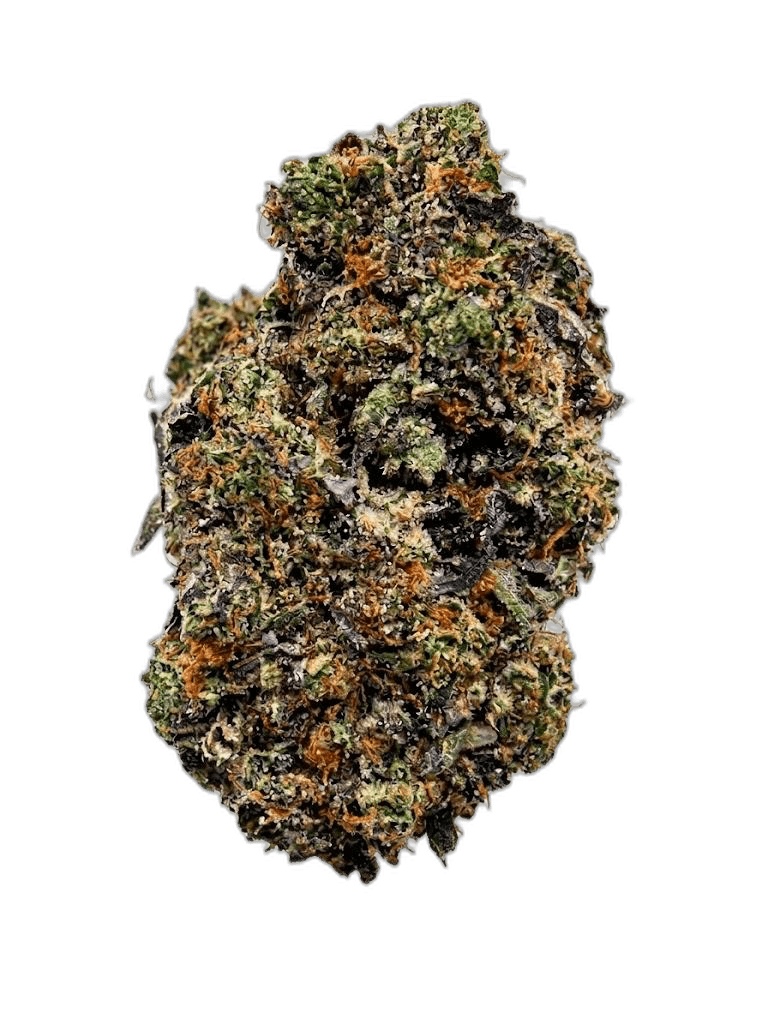
What terpenes are
Terpenes are a large family of aromatic compounds made by plants. In cannabis they are formed in the secretory cells of glandular trichomes, the tiny resin glands on the flowers, and stored in the same resin as THCA and CBDA, the acid forms of THC and CBD (Tanney et al., Frontiers in Plant Science). The guide to trichomes explains how those glands work.
More than 120 terpenes have been identified in cannabis. Scientists group them mainly by the size of their carbon skeleton: monoterpenes such as limonene, pinene and myrcene, and sesquiterpenes such as beta-caryophyllene (Tanney et al.; Santiago et al., 2019). Counting their oxygen-containing relatives, cannabis holds around 200 terpene-type compounds (American Chemical Society).
For the plant, terpenes probably serve as defence: insect-repelling monoterpenes such as alpha-pinene and limonene are concentrated in the flowers, while sesquiterpenes, which taste bitter to mammals, are more common in the lower leaves (Tanney et al.).
The main cannabis terpenes and their aromas
Most aroma charts start with the same short list. The descriptions below come from chemical references and from Leafly's cannabis glossary, which also lists common plants and foods that contain each terpene (Leafly).
Alongside the 8 below, labs routinely measure minor terpenes such as bisabolol, camphene, nerolidol, beta-pinene and alpha- and gamma-terpinene (Smith et al., PLOS One). Carene, which appears on some aroma charts, has a sweet, pungent smell likened to fir needles, musky earth and damp woodland, and occurs in turpentine and mango (Wikipedia).
- Myrcene: earthy and peppery, with sweet, fruity notes. Also in mangoes, basil, hops and lemongrass. Leafly calls it one of the most common terpenes in cannabis and most often the dominant one, and a 2021 genetic study found it was the terpene most closely tied to indica labels.
- Limonene: zesty lemon. Also found in juniper and mint, and with myrcene one of the most abundant terpenes in cannabis (Leafly). More in the limonene guide.
- Caryophyllene (beta-caryophyllene): spicy and peppery. Also in black pepper, cloves, cinnamon, oregano, basil and hops.
- Pinene: fresh pine; chemical references describe alpha-pinene as having the characteristic odour of pine (PubChem). Also in pine needles, dill, parsley and rosemary.
- Linalool: floral, with an odour likened to bergamot oil and French lavender (PubChem). Also in lavender and more than 200 other plant species.
- Terpinolene: piney, floral and woody with a hint of citrus. Also in apples, lilac, nutmeg and cumin. More in the terpinolene guide.
- Humulene: herbal and almost woody. Also in hops, sage and ginseng.
- Ocimene: sweet, herbal and woody notes. Also in basil, mint, parsley and mangoes.
Terpenes are not the whole smell
Terpenes give cannabis its most prominent floral, citrus and piney notes, but not all of its smell. A 2021 study in ACS Omega traced the skunky note to a family of sulfur compounds led by 3-methyl-2-butene-1-thiol, the molecule that also gives skunked beer its flavour. These compounds are present in very small amounts but have a large effect on smell, and they are most abundant as flowers mature and during curing (Science News).
A 2023 study of 31 rosin extracts found that terpene profiles were fairly similar across strains with very different aromas. Fruity notes tracked with esters, some citrus aromas with a newly identified group of sulfur compounds, and a chemical aroma with skatole (American Chemical Society). So a citrus smell does not prove a batch is high in limonene. Terpene content is measured by lab testing, and some product labels already list myrcene, limonene, caryophyllene and terpinolene (American Chemical Society).
Terpenes, strain names and indica vs sativa
A 2022 analysis of 89,923 lab-tested flower samples from 6 US states, the largest of its kind at the time, found that THC-dominant cannabis falls into 3 main terpene groups: high caryophyllene and limonene, high myrcene and pinene, and high terpinolene and myrcene. The indica, hybrid and sativa labels did not reliably match those groups, and the authors called marketing indica as sedating and sativa as energizing specious (Smith et al.).
A 2021 study of more than 100 samples, genotyped at over 100,000 genetic markers, reached a similar conclusion: plants labelled sativa and indica were genetically indistinct across the genome, and only 12 of the 40 terpenes and cannabinoids measured tracked the labels, myrcene most strongly (Watts et al., Nature Plants). Strain names did better than indica and sativa in the 2022 data but were still far from a reliable guide (Smith et al.).
The 3 terpene groups also had similar THC levels, so a terpene profile and a THC number tell you different things. See how much THC percentage matters.
The entourage effect: what research shows and what it doesn't
The entourage effect is the idea that cannabis compounds, terpenes included, work together so the whole plant acts differently from THC on its own. The term first appeared in a 1998 lab study about compounds the body makes itself, not plant terpenes, and was later applied to whole-plant cannabis products (Christensen et al., 2023).
That 2023 review described the research as contradictory, equivocal and inconclusive, and concluded that the proposed mechanisms remain scientifically unfounded. The main findings so far:
- Some cell studies report that certain terpenes, including linalool and beta-pinene, activate the CB1 cannabinoid receptor and add to a cannabinoid's activity (Christensen et al.).
- Other lab work found that 6 common cannabis terpenes, including limonene, myrcene and beta-caryophyllene, neither activated the CB1 or CB2 receptors nor changed how THC acted at them (Santiago et al.).
- Most research cited in support of the idea is pre-clinical, observational or review work rather than double-blind randomized trials, and the human evidence relies mostly on anecdote (Christensen et al.).
- Interactions could also add unwanted effects, which some researchers call a contra-entourage effect (Christensen et al.).
Effects, heat and safety
Charts that assign moods to terpenes, such as myrcene for relaxing or limonene for uplifting, go beyond what research supports. THC is the compound that causes the high, and stronger doses can bring anxiety, paranoia and panic (CAMH). For medical questions about cannabis, talk to a doctor or pharmacist.
Very high heat changes terpenes. Portland State University chemists found that terpenes heated to temperatures reached in some dabbing can break down into benzene and methacrolein (American Chemical Society).
Some terpenes, including limonene and terpinolene, are listed as fragrance allergens under EU cosmetics rules, which matters for people with fragrance allergies (PubChem: limonene, terpinolene).
Terpenes evaporate easily under ordinary room conditions (American Chemical Society), so storage affects how much aroma flower keeps. The weed storage guide explains how to keep it fresh.
Choosing flower by terpenes
Because strain names and indica or sativa labels are unreliable guides to chemistry (Smith et al.), judge the batch in front of you and look for lab results that list terpenes.
GasDank delivers same day across Toronto and the GTA, usually within 1 to 2 hours, and ships mail order across Canada. The menu carries lab-tested products; browse all flower. Customers must be 19 or older (21 in Quebec), with ID checked at the door.