How long weed stays good
Dried flower has no fixed expiry date, but it does change. The best long-term numbers come from a University of Mississippi study published by the United Nations Office on Drugs and Crime: cannabis stored in closed barrels, in the dark, at 20 to 22°C lost on average 16.6% of its THC after 1 year, 26.8% after 2 years, 34.5% after 3 years and 41.4% after 4 years. The loss was fastest in the first year and levelled off at roughly 7% a year after the second year.
Smell goes faster. In a year-long storage study published in 2020, the average terpene content of cannabis flower fell by more than 50% within 4 months, while the cannabinoids the plant makes lost an average of 26% over 12 months (Milay and colleagues, Frontiers in Plant Science, 2020). Terpenes are the strong-smelling compounds in cannabis, so a fading smell is an early sign of age.
Under Canada's labelling rules, the label shows the packaging date and recommended storage conditions, and an expiry date is optional (Health Canada). Producers may only print one if they have established a stability period for the product (Health Canada labelling guide).
Signs your weed has gone bad
Check in good light before you use it. If you cannot tell whether something on a bud is mould, do not use it.
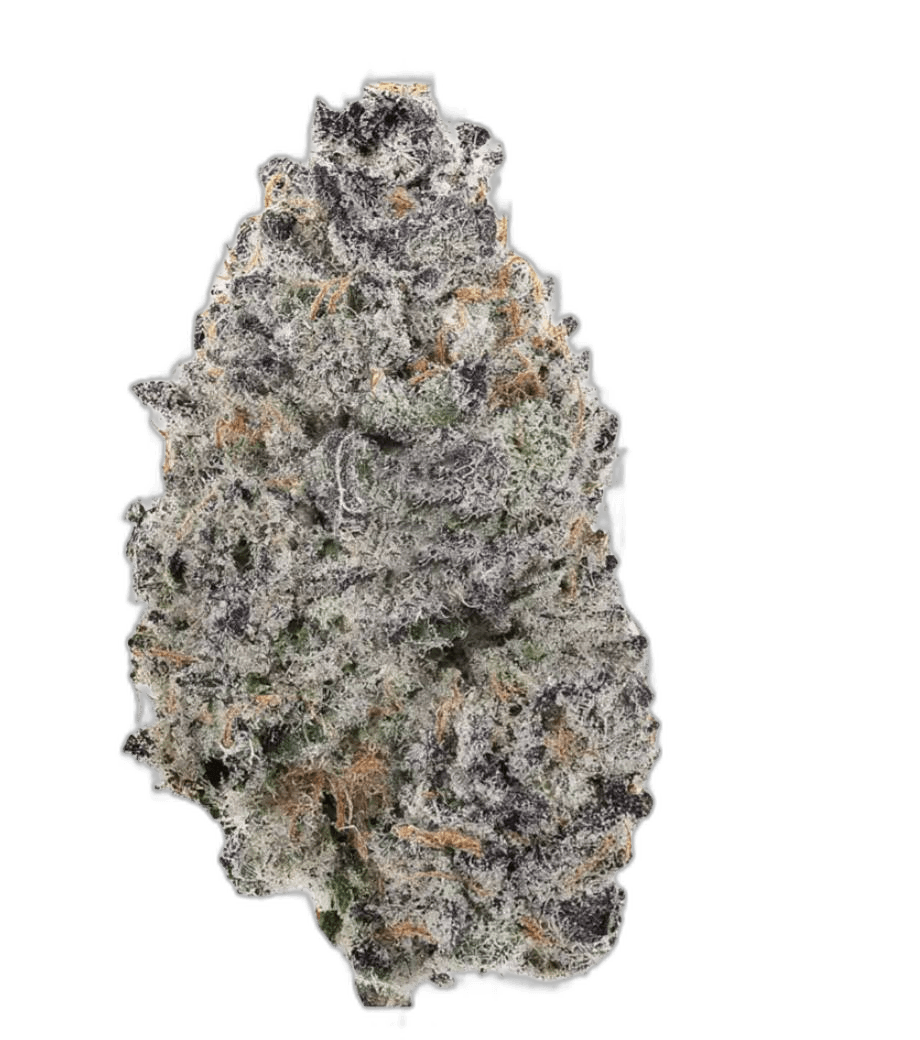
- Grey or white fuzz. Grey mould (Botrytis) forms grey-white mats of fungal threads and spores, and infected flower tissue turns brown and water-soaked before it dies (NC State Extension).
- A musty, damp smell. Toronto Public Health lists musty odours among the signs of the moisture problems that let mould grow (Toronto Public Health).
- Little or no smell. A faint aroma points to lost terpenes, which can happen within months (Milay 2020).
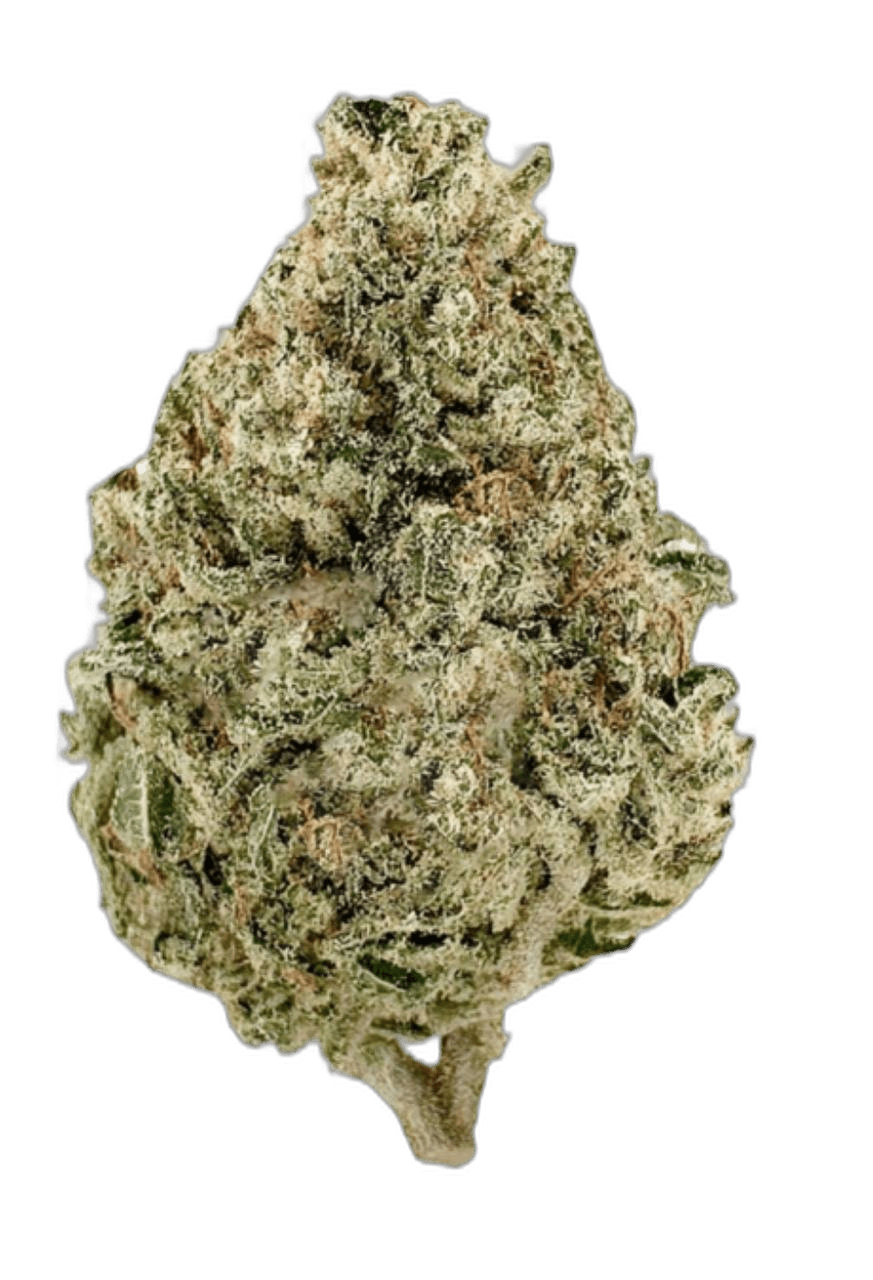
- Very dry, brittle buds. Terpenes are volatile and fade after harvest (Milay 2020), so very dry flower has often lost aroma too. Rehydrating can help the texture but cannot bring back THC or terpenes that are gone; see how to rehydrate dry weed.
Why weed loses potency: THC turns into CBN
THC slowly oxidizes, and its main breakdown product is cannabinol (CBN). CBN is absent from freshly and carefully dried cannabis, which is why the ratio of CBN to THC can be used to estimate how old a sample is (UNODC).
Light, heat and oxygen speed this up. Earlier research summarized in the UNODC paper found that ultraviolet light, storage and heat drive the conversion of THCA toward cannabinolic acid, and studies reviewed by Milay and colleagues found more breakdown in cannabis kept in the light at 22°C than in the dark at 4°C. In their own test, samples stored at 25°C aged the most (Milay 2020).
The numbers do not all move the same way. Fresh flower holds most of its THC as THCA, which slowly turns into THC during storage (Moreno-Sanz, 2016; see what THCA is). In the Milay study, measured THC actually rose in whole buds during the first months of storage, while CBN built up over time.
Is it safe to use old or mouldy weed?
Cannabis that is simply old has less THC and less aroma. Mouldy cannabis is a different matter. Health Canada's recall notices for mouldy dried cannabis warn that mould exposure can cause allergic symptoms such as sneezing, coughing, wheezing, a runny or stuffy nose and itchy or watery eyes, and they tell consumers to stop using the product (Health Canada recall notice).
Some people are more vulnerable. Toronto Public Health says older adults, pregnant women, infants and young children, people with allergies or chronic respiratory illness, and people with weakened immune systems are most likely to experience health effects from mould.
Do not smoke, vape or cook with cannabis that shows mould; see what to do with mouldy cannabis. If you feel unwell after using cannabis that may have been mouldy, especially if you have trouble breathing, talk to a doctor or pharmacist.
How to store weed so it lasts
Most of the advice follows from what breaks THC and terpenes down: air, light, heat and moisture.
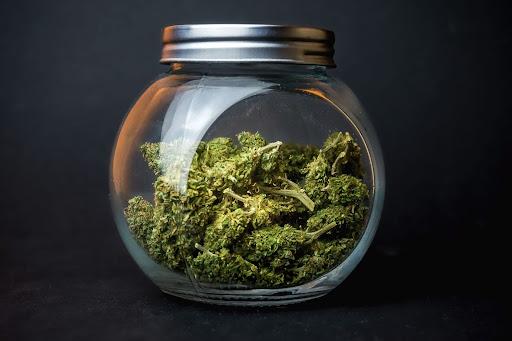
- Seal it. THC breaks down through oxidation, so keep air out with an airtight container (UNODC; Moreno-Sanz 2016).
- Keep it dark. Light helps drive the breakdown of THC and THCA (UNODC; Moreno-Sanz 2016).
- Keep it cool. In the Milay study, whole buds stored at 4°C, about fridge temperature, kept their cannabinoids and terpenes best, while 25°C caused the most aging. Very cold storage was not better: -30°C and -80°C were harder on some terpenes than 4°C.
- Keep buds whole. Ground samples lost more terpenes than whole buds, so grind just before use (Milay 2020).
- Keep it dry. Health Canada gives "store in a dry place, avoid direct light" as examples of the storage conditions printed on product labels, so follow the label (Health Canada labelling guide). Grey mould grows best at 18 to 24°C in moist or humid conditions (NC State Extension).
- Lock it up. Health Canada recommends storing cannabis locked away, out of sight and reach of children and pets, and suggests a lockbox or safe (Health Canada).
Do edibles and concentrates go bad?
Yes, on their own schedules. Edible cannabis sold in Canada cannot carry an expiry date, but it must show a best-before (durable life) date if that period is 90 days or less; cannabis extracts may show an expiry date only when a stability period has been established (Health Canada labelling guide). The Milay team also found that cannabinoids in flower were more stable than in extracts stored under similar conditions. For edibles, see do weed edibles expire, and for containers and habits, our weed storage guide.
Buying fresh flower
Buying smaller amounts more often means less flower sitting in storage. GasDank delivers same day across Toronto and the GTA, usually within 1 to 2 hours, and ships across Canada by mail order. In Toronto and Mississauga the minimum order is $40, with free delivery from $80 ($15 below that). Browse all flower; the menu carries lab-tested products. Customers must be 19 or older (21 in Quebec), with ID checked at the door.