Setting the Scene
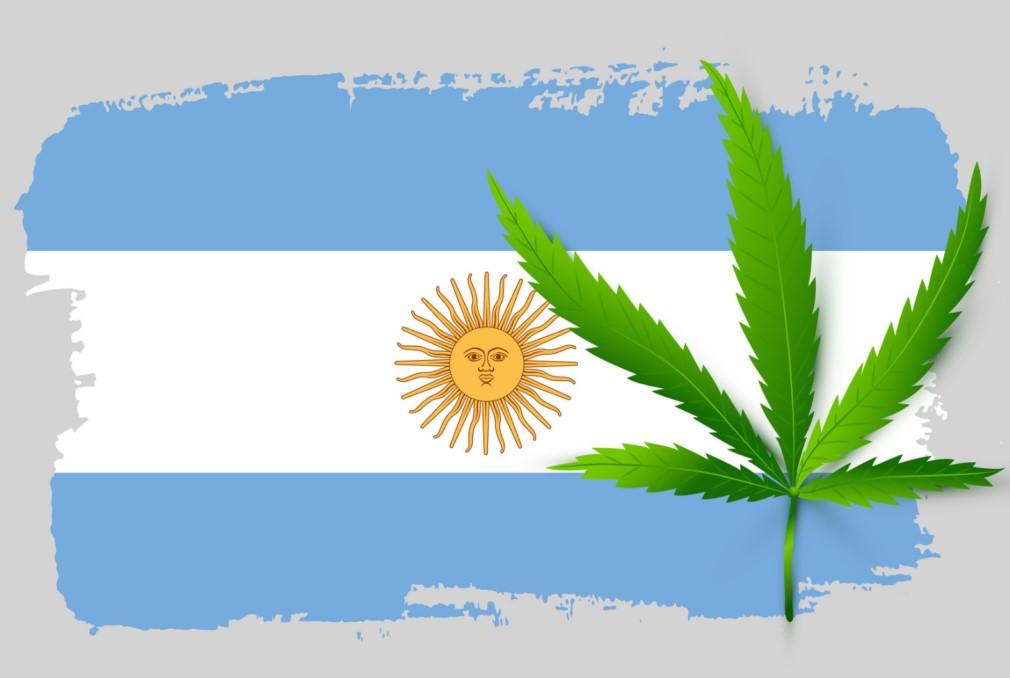
Argentina is one of the larger countries in South America, with a strong cultural identity and a long history of lively public debate. Like much of the region and the wider world, it has been working through how to handle cannabis, moving gradually from strict prohibition toward a more nuanced approach, especially around medical use. The shift has been slow and at times messy, but the direction has been toward openness.
For anyone curious about how different countries handle weed, Argentina makes an interesting case. It is a place where attitudes have clearly shifted, where a medical program exists, and where the law around personal use has softened in important ways without becoming a full open market. That mix of progress and lingering grey area is common around the world, and Argentina shows how it plays out in one country.
It is worth saying up front that laws in any country can change, and the details get complicated. This is a general overview meant to give you a feel for the situation rather than legal advice. Anyone actually dealing with cannabis in Argentina should look to current, official, local sources. With that said, the broad picture is genuinely interesting and worth understanding.
What makes the country especially worth a look is that it sits at a genuinely interesting midpoint. It is neither fully prohibitionist nor fully legalized, but somewhere in between, with real progress on medical access and a softer line on personal use existing alongside a still illegal supply. That in between status is where a lot of the world currently sits, which makes Argentina a useful example of the messy middle stage of reform.
A Brief History of Cannabis Attitudes
For much of the twentieth century, Argentina, like most of the world, treated cannabis as something to be prohibited and punished. Drug laws were strict, and cannabis was lumped in with far harder substances under a framework focused on criminalization. That approach shaped public attitudes for decades and made open conversation about cannabis difficult for a long time.
Over time, though, thinking began to shift, both in Argentina and globally. People started questioning whether treating personal cannabis use as a serious crime made sense, especially as evidence about its risks and potential benefits accumulated. Court decisions, public debate, and changing social attitudes all chipped away at the old hardline stance, opening the door to reform.
The clearest sign of this shift came with growing acceptance of medical cannabis. As patients and families spoke out about how cannabis helped with various conditions, public sympathy grew, and the political will to allow medical access followed. That momentum around medical use became the leading edge of broader change, much as it has in many other countries that later went further.
The Medical Cannabis Program
The most established part of Argentina's cannabis framework is its medical program. The country moved to allow access to medical cannabis for patients who qualify, recognizing that it can help with a range of conditions. This was a significant step, shifting cannabis from something purely criminal toward something with a legitimate, regulated medical role for people who need it.
The program has developed over time to allow registered patients to access cannabis for medical purposes, and importantly, it has included provisions around growing. Allowing patients, or those registered to grow for them, to cultivate plants for medical use is a meaningful feature, since it gives patients a practical way to access their medicine rather than relying solely on hard to obtain products.
Like any program of this kind, the medical framework comes with rules, registration, and requirements that patients need to follow. The point is to create a legitimate, controlled path for people with genuine medical needs. For many Argentines, this program has been the difference between accessing cannabis legally and being pushed toward the illegal market, which is exactly the kind of outcome medical legalization aims to fix.
Where Recreational Use Stands
Recreational cannabis is where things get more complicated in Argentina. Unlike the relatively clear medical program, recreational use sits in a grey area. Selling cannabis remains illegal, and there is no regulated recreational market the way there is in places like Canada. So while attitudes have softened, you cannot simply walk into a shop and buy weed for fun.
That said, the law around personal use has seen important softening. There has been movement, including through the courts, toward not treating the personal use of small amounts as a serious criminal matter. The thinking is that going after individual users for personal consumption is not a good use of the justice system, a view that has gained traction in many countries.
The result is a situation that can feel contradictory. Personal use has been decriminalized or treated leniently in important respects, yet the supply side, the actual selling of cannabis, stays illegal. This leaves a gap where people may use without serious legal risk but still have no legal, regulated way to buy. It is a common halfway point that many places pass through on the road to fuller reform.
The Grey Area Explained
This kind of grey area is worth understanding because it shows up in many countries, not just Argentina. On one side, the law has eased up on individual users, recognizing that punishing personal consumption harshly does more harm than good. On the other side, the broader system of prohibition around production and sale remains in place, often unchanged.
For everyday people, this creates real uncertainty. The exact lines around what is and is not permitted can be fuzzy, and how the law is applied can vary. Someone might face little risk for personal use in one situation and more in another, depending on circumstances and how authorities interpret things. That lack of clarity is one of the frustrations of a grey area system.
It also leaves the supply problem unsolved. When use is tolerated but selling stays illegal, people who want cannabis still have to get it from somewhere outside a legal framework. That keeps an unregulated market in play, with no quality control or oversight. This is exactly the tension that pushes some countries toward fuller legalization, where a regulated legal market replaces the grey area entirely.
Home Growing for Patients
One of the more progressive features of Argentina's approach is the allowance for home growing in the medical context. Letting patients, or people registered to grow on their behalf, cultivate cannabis plants for medical use is a practical and compassionate provision. It acknowledges that access matters, and that growing your own can be a reliable way for a patient to get consistent medicine.
Home growing solves a real problem. Manufactured medical cannabis products can be expensive or hard to obtain, and for a patient who depends on cannabis, that unreliability is a serious issue. Allowing cultivation gives patients more control over their own supply, lets them grow strains that suit their needs, and reduces dependence on a market that may not always deliver.
Of course, growing for medical purposes still operates within rules and registration. The idea is to keep it tied to legitimate medical need rather than opening unlimited cultivation for everyone. Still, the inclusion of home growing in the medical framework is a notable and humane element, and it reflects a thoughtful understanding of what patients actually need to access their medicine reliably.
Cannabis Culture and Public Attitudes
Beyond the law, there is the culture, and Argentine attitudes toward cannabis have clearly shifted over the years. Like in many places, what was once heavily stigmatized has become far more openly discussed and accepted, particularly among younger generations and in urban areas. Public debate about cannabis is now a normal part of the conversation rather than a taboo.
Activism has played a real role in this shift. Patients, families, and advocates pushing for access, especially for medical use, helped change hearts and minds and put pressure on lawmakers. Personal stories about how cannabis helped someone manage a difficult condition are powerful, and they did a lot to move public opinion toward acceptance and to support reform.
As in most countries, attitudes are not uniform. There are still people who hold more conservative views, and the cultural acceptance of cannabis varies by region, generation, and community. But the overall trend has been toward greater openness, mirroring a global shift. That changing culture is part of what makes continued legal reform possible, since lawmakers tend to follow public sentiment over time.
How Argentina Compares to Its Neighbours
Argentina's approach is interesting when set against the rest of South America, where countries have taken a range of positions on cannabis. Some neighbours have moved further toward regulation, while others remain stricter. The region as a whole has been a notable area for cannabis policy debate, with different countries experimenting with different models and watching how each plays out.
Uruguay, for instance, became famous as one of the first countries in the world to fully regulate recreational cannabis, taking a far more comprehensive approach than most. That made the region a kind of testing ground for reform, and Argentina's more cautious, medical led path sits at a different point on the same spectrum. Comparing them shows how varied the approaches can be even among neighbours.
This regional context matters because countries learn from one another. As some nations move toward fuller legalization and others watch the results, the whole region's thinking evolves. Argentina's gradual approach, leading with medical access and softening personal use while keeping sales illegal, represents one common path. Where it goes next will likely be shaped partly by what works elsewhere in the region and beyond.
What This Means for Travellers
For anyone visiting Argentina, the cannabis situation calls for caution and good sense. Because recreational sale is illegal and the grey area around personal use can be unclear, a traveller should never assume the rules work the way they do back home. What is perfectly legal in a place like Canada is not the same in Argentina, and assuming otherwise can lead to real trouble.
The medical program is built around registered patients and local requirements, so it is not something a visitor can simply tap into. And while personal use may be treated leniently in some respects, there is no legal place for a tourist to buy cannabis, and engaging with the illegal market carries risks no traveller should take on lightly in an unfamiliar country.
The sensible approach for any traveller is to research the current, official rules of wherever you are going and to respect local laws while you are there. Cannabis laws differ enormously from one country to the next, and ignorance is no protection. When in doubt, the safe choice abroad is to leave it alone and enjoy the things the destination is actually known for instead.
The Bigger Picture of Global Reform
Argentina's gradual journey fits into a much larger global story. Around the world, country after country has been rethinking decades of strict prohibition, moving toward medical access, decriminalization of personal use, and in some cases full legalization. The specifics differ everywhere, but the overall direction has been remarkably consistent across very different societies.
The reasons echo from place to place. Growing acceptance of cannabis as medicine, recognition that harshly punishing personal use causes more harm than good, the appeal of replacing illegal markets with regulated ones, and shifting public attitudes all push in the same direction. Argentina's path, leading with medical use and softening personal consumption, is a familiar chapter in that wider story.
What comes next anywhere is hard to predict, since reform rarely moves in a straight line. There are advances, pauses, and sometimes pushback. But the long term trend across the world has clearly been toward more openness and more sensible, health focused policy. Watching how a country like Argentina continues to develop offers a useful window into how this global shift unfolds in practice, one nation at a time.
How It Works Here in Canada
It is a useful contrast to look at how things work in Canada, where cannabis is fully legal for adults. Rather than a grey area, Canada has a clear, regulated framework. Adults of legal age can buy cannabis legally, and there is a real industry built around it with quality control, proper products, and legitimate businesses. The uncertainty that defines a grey area system simply does not apply.
That clarity makes a real difference for everyday people. Instead of wondering whether something is allowed or having to deal with an unregulated market, Canadians can access quality cannabis through legitimate channels with confidence. It is a good example of where fuller reform can lead, with a regulated market replacing the confusion and risk of prohibition and grey areas.
The difference between Canada's approach and a grey area system is night and day, and it shows the practical benefits of clear, sensible cannabis policy for consumers.
The Role of the Courts
One thing that stands out about cannabis reform in Argentina is how much of it has moved through the courts rather than only through new laws. Judicial decisions have played a real part in softening how personal use is treated, with the reasoning often centring on personal freedom and the idea that adults have a right to make choices that do not harm others. That legal thinking has nudged the country toward a more lenient stance on personal consumption.
This court led path is part of why the situation can feel like a patchwork of its own. When change comes through individual decisions and evolving interpretation rather than one big, clear law, the result is often a more nuanced and sometimes less predictable picture. People may find that the practical reality of how the law is applied does not always match a simple yes or no, which is a common feature of reform driven partly by the courts.
It also shows how reform rarely happens in a single moment. Argentina's approach has built up gradually through a mix of legislation, court rulings, and shifting public attitudes, each piece adding to the overall direction. Understanding that helps explain why the country sits where it does, with a clear medical program on one hand and a more complicated, evolving picture for personal use on the other.
Why Medical Came First
It is no accident that Argentina, like so many countries, opened up around medical cannabis before anything else. Medical use is simply the easiest case to make. When patients and families share real stories about cannabis helping with difficult conditions, it becomes much harder to justify blanket prohibition. That human element moves public opinion and gives lawmakers a clear, sympathetic reason to act.
Medical programs also tend to build trust over time. Once a country sees that regulated medical access works without the dire outcomes opponents feared, the conversation naturally shifts. People become more comfortable with the idea of legal cannabis in general, and the experience of running a medical system builds the practical knowledge needed to regulate it more broadly later on. The medical step lays real groundwork.
That pattern, medical access first and broader reform later, has repeated around the world, and Argentina fits the mould. Whether or not the country eventually moves toward a fully regulated recreational market, the medical program has already done important work. It established that cannabis has legitimate uses, created a legal framework, and shifted attitudes, all of which are the usual ingredients for further change down the road.
What to Take Away From Argentina's Example
If there is a single lesson in Argentina's cannabis story, it is that reform usually arrives in stages rather than all at once. The country shows what an in between point looks like in practice, with genuine medical access and a softened stance on personal use sitting alongside a supply side that remains illegal. It is progress, clearly, but progress that is still very much in motion rather than finished.
For an outside observer, that makes Argentina a useful case study in how messy and gradual real reform tends to be. The clean, fully regulated systems some countries now enjoy did not appear overnight, and most passed through exactly this kind of complicated middle stage first. Watching a country work through it in real time is a good reminder that policy change is a process, full of partial steps and ongoing debate.
And it underlines how much the structure of the law shapes everyday life. Where rules are clear, people know where they stand. Where they sit in a grey area, uncertainty follows, even when attitudes have plainly softened. That contrast, between clarity and ambiguity, is one of the most practical things to take away, and it is exactly why a clear national framework like Canada's is worth appreciating.
Getting Quality Cannabis in Toronto and the GTA
While cannabis policy keeps evolving around the world, here in Canada you can simply enjoy quality cannabis without the grey area headaches. GasDank serves adults across Toronto and the wider GTA with a strong selection of flower, concentrates, edibles, and more, all properly handled so you get a clean, quality product every time you order.
Convenience is a big part of what we offer. We deliver same day across Toronto and the GTA, usually within one to two hours, so you are never waiting around. For anyone outside the local zone, we ship Canada wide by mail order, so quality cannabis can reach people across the country wherever they happen to be.
Ordering is simple and straightforward. The minimum starts at $40, delivery is free once you pass your area's threshold, and we accept cash or Interac e-Transfer. You just need to be 19 or older. While other parts of the world work through their own cannabis journeys, we are glad to make accessing quality cannabis here easy, legal, and hassle free for adults across the region.