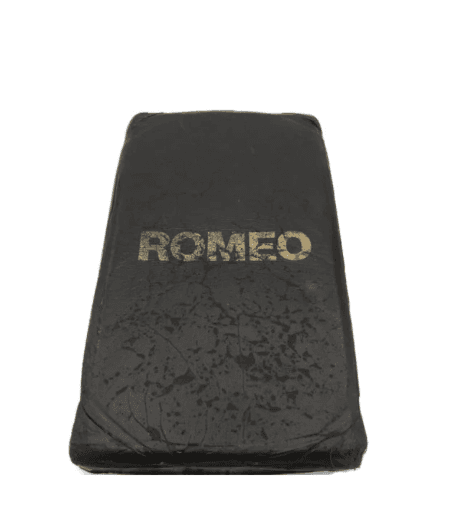
Romeo Afghan Hash
Select weight to add to cart.
1 to 2 hour GTA delivery . Cash or e-Transfer . 19+ . Free over $80
Romeo Afghan Hash carries the Afghan name and is offered in 1 g, 3.5 g, 7 g, 14 g and 28 g weights. Hash is compressed resin, made by collecting the plant’s trichomes, or resin glands, and pressing them together.
Where the heat comes in
Sensi Seeds describes the step that marks the Afghan method: hash makers buy garda, the sieved resin powder, cup it in one hand and hold a burning match to it until it is soft enough to shape into a dark, sticky ball. Moroccan hash, by its account, is normally sieved dry and then pressed cold. The UNODC’s 2009 Afghanistan cannabis survey goes further, suggesting the Afghan and Moroccan powders may not be the same product at all, since the two differ in processing, in the plant varieties used and in climate.
Powder sprinkled into a flame
UNODC records the traditional northern version as a two-person job. One farmer cups a handful of garda while a match burns and the other sprinkles powder over the flame; with each round the powder softens, grows sticky and firms up, and it is finally pressed and hand-rolled into a greenish-brown lump. UNODC gives three names for the result: Jooshi hashish, Balkhi hashish and Sherak-i-Mazar, which it translates as “milk of Mazar”.
The powder of choice is Jooshi garda, also called Balkhi garda: a first grade processed in the old northern way and considered the best, richer in resin and with no leaf at all, whereas central and eastern areas mix leaves through their garda. By UNODC’s figures, it takes 25 kg of regular first garda to make roughly 14 kg of Jooshi.
The powder before the press
Garda is made by threshing and sieving. UNODC describes farmers beating dried plants against a drum to separate the buds, gathering the resinous dust, removing its seeds and sifting it through cloth laid over a sloped wooden frame; after that, it gets roughly 5 minutes of tossing inside a cloth bag. Three rounds of sieving are done in all.
Sieving gently the first time usually produces first garda, which holds the most resin; the later grades, second and third (and in some southern cases a fourth), are thought to carry much more plant matter. UNODC found that no fixed standard defines the grades across regions. Sensi Seeds ranks garda the same way, by resin against leaf, and says the third grade holds many more impurities.
Going slowly with hash
Kief, wax, shatter and hash all count as high-THC extracts for Health Canada, which recommends that beginners and infrequent users give them a miss. Our dry sift hash guide goes further into sieved resin and its grades, and there is also our guide to making hash at home.
Customer reviews
Be the first to review Romeo Afghan Hash.
More Concentrates


Romeo Afghan Hash — Frequently Asked Questions
Q.What does cooking mean in Afghan hash making?
In UNODC’s 2009 survey it is the southern way of finishing garda. The powder is pressed between the palms; the resin-rich first grade turns tacky with rubbing alone, while poorer garda needs a splash of water to hold together. The lump then goes over a low flame, and the rubbing and heating alternate over several rounds.
Q.Which Afghan plants are said to give better resin?
Farmers in UNODC’s 2009 survey singled out a pink-red-stemmed type as the better resin plant, next to a green-stemmed one. The survey also describes cannabis there as a summer crop, sown from April to June and brought in from October to January.
Q.Who uses machines to make Afghan hash?
Traders, not farmers, according to UNODC, which calls machine kneading a more recent development. The equipment came from Pakistan, and it works garda into a hashish paste.
Q.What weights does Romeo Afghan Hash come in?
Five: 1 g, 3.5 g, 7 g, 14 g and 28 g.