Why this topic matters
Mixing cannabis and tobacco is one of the most common practices in the world, and yet a lot of people never really stop to think about it. If you have ever rolled a spliff, you have done it. In much of Europe and plenty of other places, blending tobacco into a joint is just the default way people smoke. So this is not some fringe habit, it is everyday behaviour for millions, which is exactly why it is worth talking about honestly.
This article takes a harm reduction angle. That means we are not here to lecture or judge. We are here to lay out what mixing actually involves and the practical tradeoffs, so you can make informed choices. We are not making medical claims, and nothing here is a substitute for talking to a healthcare professional. The goal is simply to give you clear, no nonsense information.
Harm reduction is built on a simple idea. People do what they do, and the most useful thing is to help them do it in less risky ways rather than just telling them to stop. Whether you currently mix, are curious about it, or want to cut back, understanding the basics puts you in a better position. So let us walk through it plainly, the way a budtender actually would.
What mixing actually means
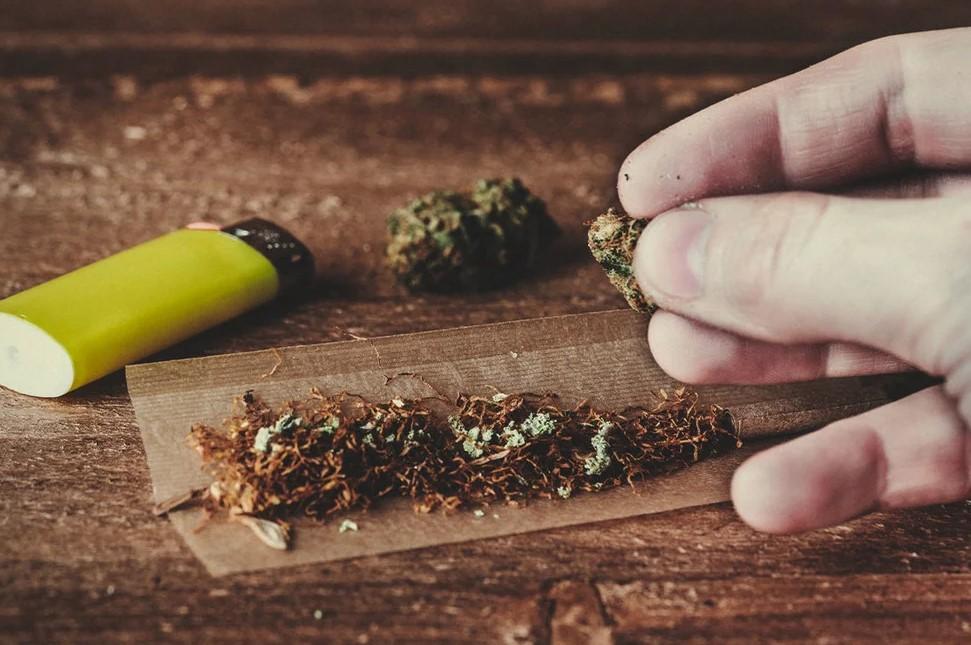
When people talk about mixing cannabis and tobacco, they usually mean a few specific things. The most common is a spliff, which is a joint rolled with both cannabis and tobacco blended together. There is also the practice of adding tobacco to a bowl or a bong, sometimes called a mix or a topper, where a bit of tobacco goes in alongside the cannabis. Both are widespread.
This is different from a pure joint, which is just cannabis, and from smoking tobacco on its own. The blend is the key thing. People add tobacco for a handful of reasons, which we will get into, but the practical upshot is that you are inhaling two substances at once rather than one. That simple fact is at the heart of the tradeoffs worth understanding.
It is also worth distinguishing this from vaping or edibles, which do not involve combustion in the same way at all. Mixing is specifically a smoking practice, and a lot of the considerations come down to the realities of inhaling burnt plant material. If you are someone who has moved away from smoking entirely, much of this may be less relevant to your routine, but for smokers it is very much worth knowing.
Why people mix in the first place
There are real reasons people blend tobacco into their cannabis, and understanding them helps explain why the practice is so common. One big one is simply that it is the cultural norm in many places. If you learned to smoke in a setting where spliffs were standard, that is just how you do it, no further thought required. Habit and culture are powerful drivers here.
Another reason is practical. Tobacco can change how a joint burns, helping it stay lit and burn more evenly, which some people find makes for a smoother roll. It can also stretch your cannabis further, since adding tobacco means you use less flower per joint. For people watching their supply or their budget, that stretching effect is a genuine appeal, even if it comes with tradeoffs.
Some people also say they like the combined feeling, the particular head rush that the nicotine adds on top of the cannabis. That sensation is part of why the habit sticks for many. We are describing why people do it, not endorsing it, and the point is just to be clear eyed. Once you understand the reasons, you are in a better spot to weigh whether the practice is right for you.
The nicotine factor
The single most important thing to understand about adding tobacco is nicotine. Tobacco contains nicotine, and nicotine is addictive. That is the central harm reduction point of this whole topic. When you mix tobacco into your cannabis, you are introducing an addictive substance into a habit that, on its own, does not contain it. That changes the equation in a real way.
This matters because someone who only ever intended to use cannabis can end up with a nicotine habit they did not plan on, simply through regular spliff smoking. The nicotine creeps in alongside the cannabis, and over time the body can come to expect it. People are often surprised to realize that their attachment to spliffs is partly an attachment to nicotine, not just cannabis.
We are not making medical claims here, and we are not going to pretend to be experts on addiction. What we can do is point out the plain fact that nicotine is addictive and that mixing brings it into the picture. If you are trying to keep your cannabis use free of nicotine, that is a strong reason to think about whether mixing fits your goals. A professional can offer real guidance if nicotine is a concern for you.
Combustion and inhaling smoke
Beyond nicotine, there is the simple reality that smoking anything involves combustion, and combustion produces smoke and byproducts that you then inhale. This is true of cannabis on its own and true of tobacco on its own, and mixing means you are inhaling the combustion products of both at once. That is just the nature of burning plant material and breathing it in.
We are deliberately not going to throw around specific medical claims about what that does, because that is outside our lane and this is not medical advice. What we can say in general terms is that inhaling smoke of any kind is not the same as not inhaling smoke, and that is a consideration people factor in when they think about how they consume. It is worth being honest about that rather than pretending smoke is nothing.
This is also why a lot of harm reduction conversations point toward alternatives that avoid combustion, which we will touch on. If reducing the smoke you inhale matters to you, the format you choose makes a difference. Again, for anything specific to your health, a healthcare professional is the right person to talk to. Our role is just to lay out the general picture clearly and let you take it from there.
How mixing changes the experience
Mixing does change the actual experience of using cannabis, and it is worth being aware of how. The nicotine adds its own feeling, often described as a head rush or a buzz, layered on top of the cannabis effects. For people used to spliffs, that combined sensation is what normal feels like, to the point that pure cannabis can feel different or even underwhelming by comparison.
That is actually a useful thing to notice. If you have only ever smoked spliffs, part of what you associate with getting high may really be the nicotine. People who switch to pure cannabis sometimes find the experience cleaner or clearer once the nicotine is out of the mix, while others miss that particular rush. Neither reaction is wrong, they are just different, and knowing this helps you understand your own habit.
The burn and the draw change too. Tobacco can make a joint burn faster and hotter, which affects the smoke and the taste. Some people prefer that, others find pure cannabis smoother and more flavourful, especially with good flower where the terpenes really come through. If flavour matters to you, that is one more thing to weigh when deciding whether mixing is worth it for your sessions.
Harm reduction options to consider
If you currently mix and want to reduce the downsides without necessarily quitting cannabis, there are practical steps worth knowing. The most direct one is simply using less tobacco, or none at all. Some people transition from heavy spliffs to lighter mixes, then to pure joints, as a gradual way to cut their nicotine intake while keeping the part of the ritual they enjoy.
Switching formats is another route. Pipes and bongs let you smoke cannabis without rolling in tobacco at all, and many people find that an easy adjustment. Moving toward vaping or edibles avoids combustion entirely, which sidesteps the smoke question along with the nicotine, though these change the experience and require their own learning curve, especially edibles with their delayed onset.
There are also herbal smoking blends that some people use as a tobacco substitute in joints, giving them the rolling experience and the burn without the nicotine. Whether any of these suits you depends on what you actually like about your current habit. The harm reduction principle is to find the smallest change that meaningfully reduces risk while still working for you. Small, sustainable steps tend to beat dramatic ones.
If you want to cut out tobacco
Plenty of people reach a point where they want the cannabis without the tobacco, and that is a completely reasonable goal. The good news is that there are lots of ways to enjoy cannabis that do not involve tobacco at all. Pure joints, pipes, bongs, vaporizers, and edibles all let you keep cannabis in your life while leaving the nicotine behind, which is the whole idea.
The tricky part for long time mixers is often the habit and the ritual as much as the substance. Rolling, the hand to mouth motion, the social aspect, all of it can be tied up in how you have always done things. Recognizing that can help. Sometimes keeping a similar ritual, like rolling a pure joint or using a familiar pipe, makes dropping the tobacco much easier than going cold to a totally new format.
If nicotine has become a real dependency, that is genuinely worth taking seriously, and it is exactly the kind of thing a healthcare professional can help with. We are not equipped to give that kind of guidance, and we would not pretend to be. What we can say is that wanting to separate your cannabis use from nicotine is a sensible goal, and there are plenty of tobacco free ways to keep enjoying cannabis.
Being honest about the tradeoffs
The honest summary is that mixing cannabis and tobacco comes with tradeoffs, and harm reduction is about understanding them rather than ignoring them. On one side, people mix for cultural reasons, for a better burn, to stretch their flower, or for the combined feeling. Those are real reasons and we are not dismissing them. People are not foolish for doing it.
On the other side, the big tradeoff is nicotine, which is addictive and which mixing introduces into a habit that does not otherwise contain it. There is also the general reality that you are inhaling the combustion products of two substances instead of one. We are not making medical claims about specific outcomes, but these are plain facts worth factoring into your choices.
Where you land is up to you. Some people decide the tradeoffs are fine for them, others decide to cut back or switch formats, and both are valid as long as the choice is informed. That is the whole point of harm reduction. Not telling you what to do, but making sure you actually know what is on the table. And for anything health related, a professional is always the right call.
What we can and cannot help with
To be clear about our role, we are budtenders, not doctors or addiction specialists. We can talk to you all day about cannabis itself, the different strains, formats, and products, and we are glad to help you find tobacco free ways to enjoy it if that is your goal. That is squarely our lane and where we can actually be useful to you.
What we cannot do is give medical advice or guide you through nicotine dependence in a clinical sense. If tobacco or nicotine has become a problem for you, or if you have any health concerns connected to smoking, the right move is to talk to a healthcare professional. They have the training and tools that we simply do not, and they can give you real, personalized guidance.
Keeping those lanes clear is the responsible thing to do. We will happily set you up with cannabis and help you explore options that fit your harm reduction goals. We will not pretend to be something we are not. Nothing in this article is medical advice, it is general information aimed at helping you make informed choices about a very common practice.
The role of culture and habit
It is hard to talk about mixing without talking about culture, because so much of the practice is passed down rather than chosen consciously. In many parts of the world, the spliff is simply how cannabis is smoked, full stop. People learn it from friends, from family, from the scene around them, and it becomes second nature long before anyone questions whether tobacco needs to be there at all.
This matters for harm reduction because habits rooted in culture are sticky. Telling someone the tobacco is optional can genuinely surprise them if they have never known any other way. A lot of long time mixers have just never tried a pure joint, and when they do, they are often struck by how different it is. Naming the cultural default is the first step to realizing you have a choice.
None of this is about looking down on the practice. Cultural habits exist for reasons and they are part of how people connect and enjoy themselves. The harm reduction angle is just to gently point out that the tobacco is not actually required to enjoy cannabis. Once you see the habit for what it is, you can decide on purpose whether to keep it, rather than doing it on autopilot.
Younger users and starting out
One particular concern worth raising is people who are new to all of this. Someone who starts out smoking spliffs may pick up a nicotine habit before they even realize it, because the tobacco was just part of how they learned to use cannabis. That is a real pathway into nicotine dependence that has nothing to do with ever intending to smoke tobacco on its own.
For anyone newer to cannabis, this is genuinely useful to know up front. If you are figuring out how you want to consume, you do not have to start with tobacco in the mix at all. Plenty of people use pure flower, vaporizers, or edibles and never go near a spliff. Starting tobacco free keeps your cannabis use separate from nicotine from the very beginning, which is the simpler path.
We want to be clear that cannabis itself is for adults, 19 and older, and that nothing here is medical advice. The point of flagging this is just awareness. If you are early in your cannabis journey and want to avoid an accidental nicotine habit, knowing that mixing is optional, not mandatory, is one of the more useful things you can take away from this whole conversation.
Making an informed choice
At the end of the day, harm reduction is about informed choice, and that is what we hope you walk away with. You now know what mixing involves, why people do it, and the main tradeoffs, especially the nicotine. Armed with that, you can decide what fits your life rather than just defaulting to whatever you have always done or whatever everyone around you does.
For some people, the informed choice will be to keep mixing, and that is their call to make. For others it will be to cut back, switch formats, or drop tobacco entirely. There is no single right answer, because people have different goals and different relationships with these substances. The value is in choosing deliberately, with a clear picture of what each option actually means.
Whatever you decide, give yourself room to adjust over time. Habits change, goals change, and you can revisit your choices whenever you like. If health questions come up, especially around nicotine, a healthcare professional is the right resource. And for the cannabis side, we are always here to help you find products and formats that match wherever you have landed. Nothing here is medical advice, just honest information.
Shopping cannabis with GasDank
If you are looking to enjoy cannabis, with or without tobacco, GasDank makes the cannabis part easy. We serve Toronto and the wider GTA with same day delivery, so there is no waiting and no trip to make. Browse the menu online, place your order, and it comes to your door. Our minimum starts at $40, delivery is free once you pass $80 ($160 in the outer GTA), and you can pay with cash or Interac e-Transfer.
Our menu covers flower, vapes, edibles, and more, so if part of your harm reduction plan is moving away from smoking or away from tobacco specifically, you have plenty of options to explore. If you want help finding a format that fits your goals, just ask. We are happy to point you toward pure flower, vaporizer friendly products, or edibles, depending on what you are after.
Keep in mind that we handle the cannabis side, not the medical side. Nothing here is medical advice, and if nicotine or smoking is a health concern for you, a professional is the right person to talk to. For everything cannabis, though, GasDank is built to make it simple. Same day delivery across Toronto and the GTA, a $40 minimum ($60 in the outer GTA), free once you pass your area's threshold, cash or Interac e-Transfer, and you just need to be 19 or older.