Is it legal to grow weed at home in Canada?
Under federal law, adults of legal age can grow up to 4 cannabis plants per household, not per person, according to Health Canada. The Cannabis Act caps the plants you cultivate, propagate or harvest at 4 at any one time, yard included. Start with seeds from a seller you trust, and if you take a clone, ask how the mother plant was grown and what it was sprayed with. You may share up to 30 g of your harvest with other adults, but not sell it.
- Ontario: up to 4 plants per residence if you are 19 or older, the plants are for personal use, and your lease or condo rules allow it (Government of Ontario).
- Quebec: growing cannabis for personal use is prohibited, and so is possessing a cannabis plant (Gouvernement du Québec). The Supreme Court of Canada upheld the ban in April 2023.
- Manitoba: home growing was banned until May 1, 2025. Adults 19 and older can now grow up to 4 plants per household, indoors and inaccessible to anyone under 19 (Government of Manitoba, Liquor, Gaming and Cannabis Authority of Manitoba).
- Everywhere: provinces, territories and cities can add rules on zoning, fire safety and electrical safety, so Health Canada advises checking with your local government before you start.
Seeds or clones?
Most beginners start from seed. Leafly's seed guide covers the main types: regular, with roughly a 50/50 chance of a female plant; feminized, bred to produce only females; and autoflowering. Only females produce buds, and with regular seeds you have to grow the plants for weeks before you can spot and remove the males, so feminized seeds save beginners a step.
Feminized seeds come from female plants made to produce pollen, for example through stress or a silver spray. Research in Frontiers in Plant Science confirms that seeds from such self-pollinated female flowers grow into genetically female plants, though females can still form some male flowers, and stress has been reported to encourage it.
Clones are rooted cuttings from a mother plant, genetically identical to it and free of surprise males, per a 2019 cultivation review in the American Journal of Plant Sciences; in one trial it cites, cuttings rooted best with at least 3 fully expanded leaves and a rooting hormone. If you root cuttings from a plant you grew yourself, each one counts toward your 4.
Autoflower or photoperiod?
Most cannabis is a short-day plant: it flowers once nights become long enough. Indoors, growers keep these photoperiod plants growing leaves and stems under 18 or 24 hours of light, then switch to 12 hours of light and 12 of darkness; the 2019 review notes the first flowers appear about a week after the change.
Autoflowering plants ignore day length. Leafly says they go from seed to harvest in 60 to 90 days and stay smaller than photoperiod plants, so yields are smaller. The trait is often credited to a wild type called Cannabis ruderalis, though a 2022 genetic study notes that recent genomic work does not support ruderalis as a separate group. Leafly's seed guide notes that both feminized and autoflowering seeds are popular with beginners.
Setting up indoors or outdoors
Indoors, Leafly's indoor growing guide suggests a space where you control light, temperature and humidity, such as a grow tent, closet or spare room, with 18 hours of light a day during growth, temperatures of 21 to 29°C while the lights are on and relative humidity of 40 to 60% in the vegetative stage. Health Canada adds that ventilation to remove moisture helps prevent mould on the plants and in your home, and suggests odour filters, keeping plants out of view and calling a professional before any wiring changes. Short on room? See these tips on growing weed in small spaces.
Outdoors, the season sets the schedule. Growers often start seeds indoors and move the plants outside once spring warms up; Leafly's outdoor guide says that is usually April or May in the Northern Hemisphere, depending on the climate, and warns that sustained heat above 29°C stops growth while long stretches below 13°C can stunt or damage plants. Pick a sheltered spot away from night-time garden or security lights, since flowering needs long, uninterrupted nights (2019 review). Most outdoor harvests happen in early to mid-fall. Remember that Manitoba requires indoor growing.
Germinating seeds and caring for seedlings
- Place seeds a few centimetres apart between paper towels soaked in distilled water, sandwich them between 2 plates, and keep them somewhere warm, about 21 to 29°C, as Leafly's seed guide describes.
- Check daily. Taproots usually appear in 2 or 3 days, sometimes up to 7.
- Move each sprouted seed into its own small container of soil or peat with drainage holes.
- The very first leaves are the rounded cotyledons; the classic serrated fan leaves follow, per Leafly's guide to growth stages.
- Give seedlings warmth, humid air and about 18 hours of light, and water every 3 to 7 days or when the top 5 cm of soil feels dry. The 2019 review cites about 75% relative humidity for young plants at 25°C.
- After 2 to 3 weeks, when roots start poking out of the drainage holes, move the plant to a bigger pot.
Soil or hydro, pots, water and feeding
Soil is the simpler start. The 2019 review notes that soil buffers mistakes better and is easier to set up, while hydroponics gives more control but needs a constant supply of water, electricity and nutrients, and the evidence so far shows no gain in yield or potency over soil. Curious anyway? Start with what hydroponic weed is.
- Pots: use drainage holes and step up to at least twice the volume when you transplant. Leafly's indoor guide notes that many growers transplant once, from a 1-gallon (about 4 L) pot to a 5-gallon (about 19 L) one, and that bigger plants may need 7 to 10 gallons (about 27 to 38 L).
- Water: water when the top 5 cm of soil is dry; in the vegetative stage Leafly's watering guide says that is often every 2 to 4 days.
- pH: the American Herbal Pharmacopoeia, cited in the 2019 review, recommends irrigation water at pH 6.5 to 7.2 for soil and 5.8 to 6.0 for hydroponics, though the review stresses that the ideal pH has not been pinned down by experiments.
- Feeding: start light and increase slowly. In one fertilizer trial described in the review, yields dropped at the highest rates, which the researchers put down to salt build-up. Organic fertilizers are not recommended for hydroponic reservoirs because they ferment.
Flowering, and why males have to go
Once photoperiod plants are on 12 hours of light, Leafly's guide to growth stages puts flowering at about 8 to 11 weeks; for 200 indoor varieties from European producers, the 2019 review reports a recommended 7 to 9 weeks. Keep the dark period truly dark: the review explains that even a brief flash of light at night can switch off the plant's flowering signal.
Cannabis plants are male or female, and only females make buds. Leafly's seed guide advises removing males before they release pollen, because even one male can pollinate the crop and fill the buds with seeds. Males grow pollen sacs at the nodes, where branches meet the main stem; females grow white, hair-like stigmas.
Humidity matters more as buds fatten. The 2019 review cites 55 to 60% relative humidity at 25°C for the growth and flowering stages.
When to harvest
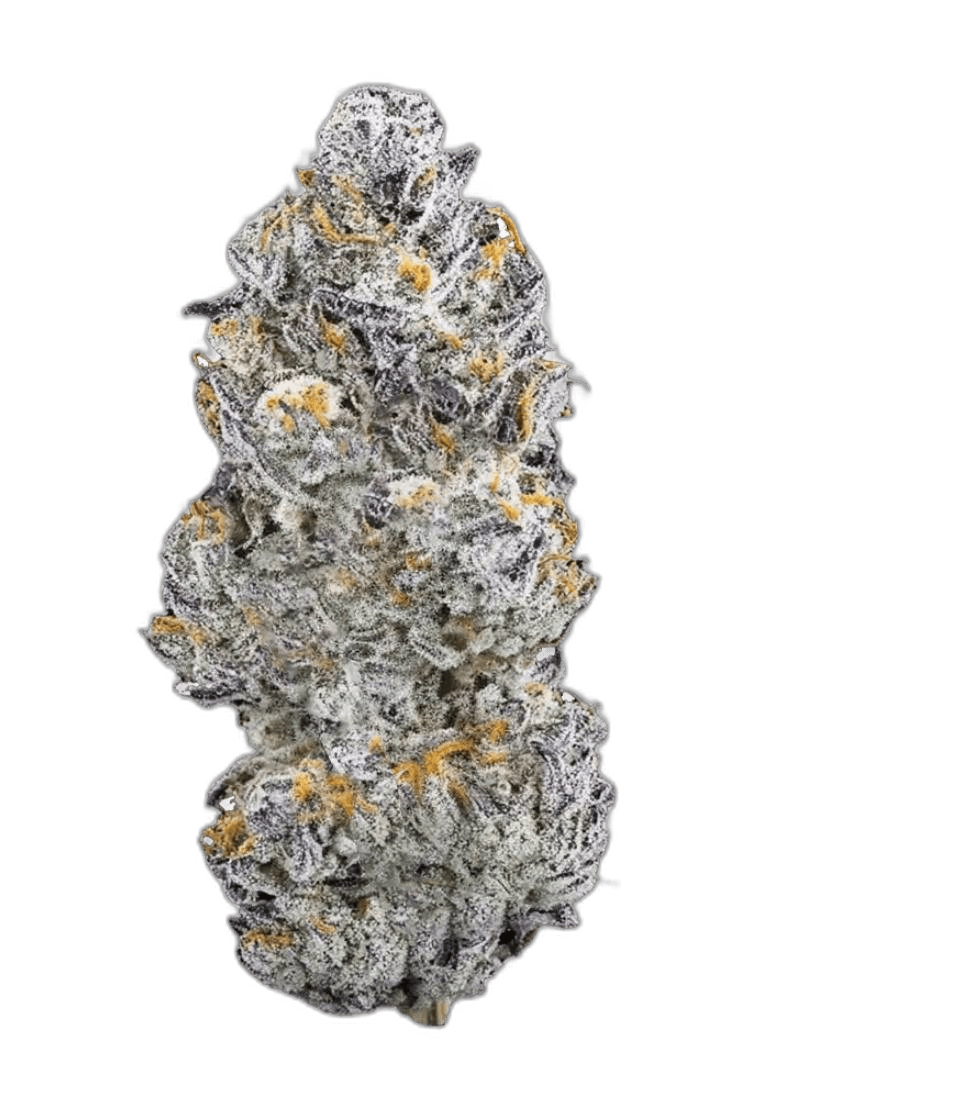
A common rule of thumb is to harvest when more than half of the buds' trichomes have turned from clear to milky white or amber, checked with a digital microscope; the 2019 review, citing the American Herbal Pharmacopoeia, also times harvest by that colour shift, and understanding trichomes shows what each stage looks like. Other signs on the review's list are about 75% of the stigmas turning brown, buds that feel firm when pressed and a peak in aroma, and Leafly's harvest guide notes that the stigmas turn from white to orange and start to curl. Even so, the 2019 review calls harvest timing subjective.
Next, dry the branches in a dark room at about 15 to 21°C and 45 to 55% humidity, then cure the buds in sealed jars; how to dry and cure weed buds has the full method.
Troubleshooting common problems
- Drooping, yellowing plant in wet soil: hold off watering until the top 5 cm dries, and make sure the pot drains. In a 2019 study of cannabis diseases, root-rot fungi such as Pythium and Fusarium caused root browning, stunting, yellowing and sometimes plant death.
- Crispy, brown leaf tips: growers usually read this as overfeeding. Cut back on fertilizer; too much raises salt levels, which cut yields in the trial mentioned above.
- Curling or clawing leaves: there are several possible causes, so work through them in what causes curling weed leaves.
- White, powdery spots on leaves: likely powdery mildew, the main leaf disease found in the 2019 study. Improve ventilation and bring humidity down.
- Brown, decaying patches in buds: bud rot. The 2019 study found Botrytis and other bud rots in cannabis crops, and bud fungi caused decay under high humidity. Remove affected buds, keep humidity in range and thin out dense growth; OSU Extension notes that pruning improves airflow under the canopy and discourages the moist pockets where mould develops.
- Pests: Health Canada says no pesticides are registered specifically for cannabis grown at home, even products labelled for all plants, and suggests contacting its Pest Management Information Service with questions.
- Seeds in your buds: pollen got in, from a male or from a plant with both male and female flowers. Stress, including disrupted light schedules, has been reported to push female plants to form male flowers, so keep the light cycle steady and check plants for pollen sacs.
- Plants will not flower: look for light leaks during the dark period, and make sure photoperiod plants are not still on an 18-hour schedule.
If you would rather not wait
A first grow takes months from seed to a cured jar. In the meantime, GasDank offers same-day delivery across Toronto and the GTA, usually within 1 to 2 hours, and mail order across Canada. The menu carries lab-tested products; browse all flower. Customers must be 19 or older (21 in Quebec), with ID checked at the door.